
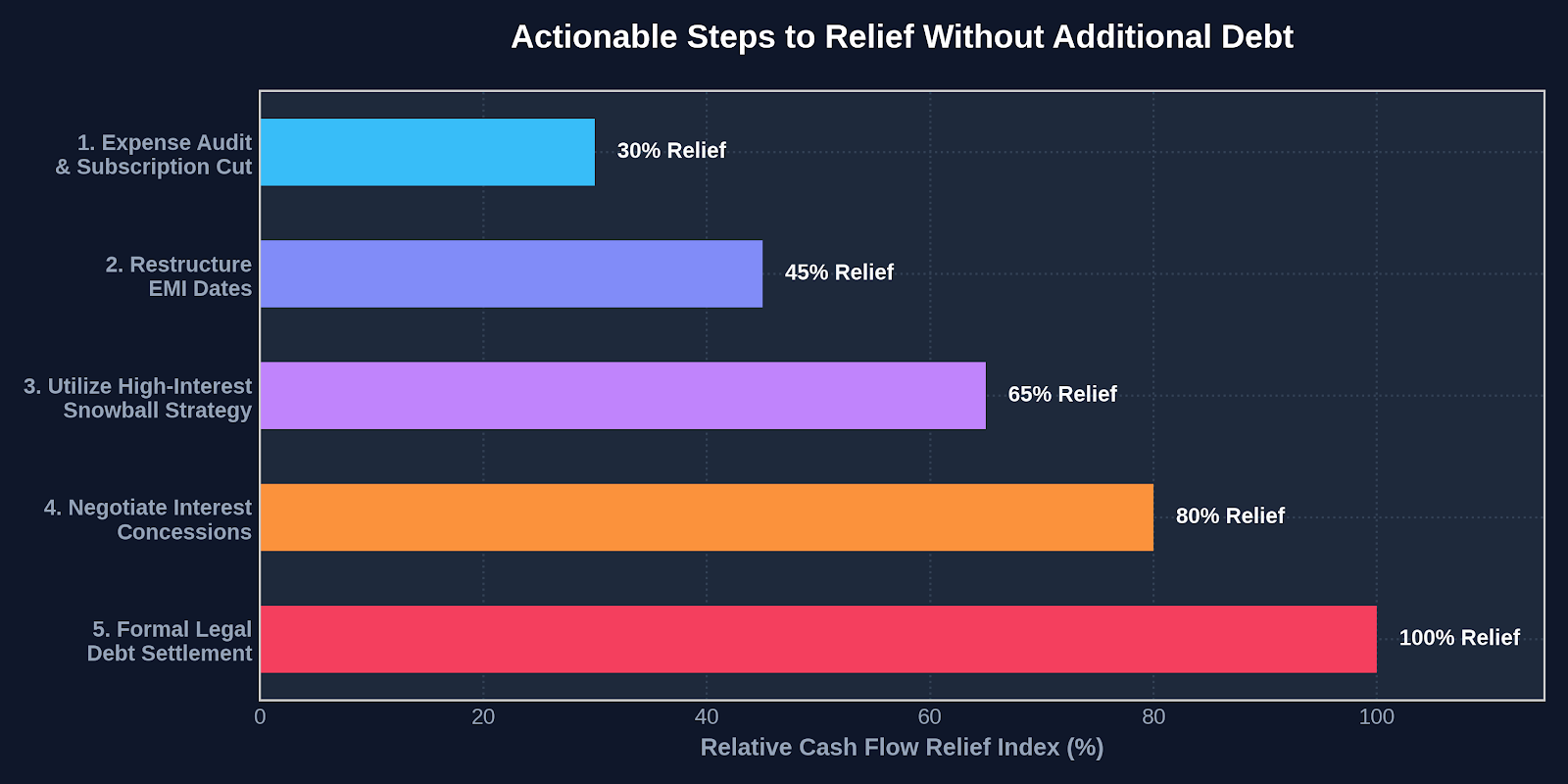
When monthly bills, credit card payments, and loan Equated Monthly Installments (EMIs) consume most of your paycheck, financial anxiety can feel overwhelming. In such moments, the default impulse for many borrowers is to seek short-term relief by taking on fresh credit—such as personal top-up loans, credit card balance transfers, or instant digital credit apps.
However, borrowing your way out of debt rarely works. Taking new loans to service existing obligations creates a dangerous debt spiral, compounding high interest charges and pushing long-term financial recovery further out of reach.
Fortunately, you can regain control of your monthly cash flow and alleviate financial stress without taking on additional debt liabilities.
1. Perform a Ruthless Cash Flow Audit
When money is tight, vague estimates of monthly expenses increase anxiety. Take time to list every fixed liability and variable expense over the past three months.
- Identify Non-Essential Leakages: Cancel unused app subscriptions, gym memberships, and automated recurring charges.
- Adopt Zero-Based Budgeting: Allocate every rupee of income to specific categories—housing, utilities, essential groceries, and mandatory EMIs—before spending on discretionary choices.
- Build a Micro Emergency Buffer: Even setting aside Rs. 2,000 to Rs. 5,000 creates a safety net that keeps unexpected expenses from turning into credit card charges.
2. Restructure Repayment Schedules With Existing Lenders
Borrowers often assume loan terms are rigid, but financial institutions prefer working with proactive borrowers rather than dealing with non-performing loans.
- Request Tenure Extension: Contact your bank to request an extended loan tenure. While a longer tenure increases total interest over time, it provides immediate breathing room by lowering your monthly EMI.
- Align Payment Dates With Income: Request to shift EMI debit dates to 2 to 3 days after your salary credit date, avoiding unnecessary cheque bounce penalties and late fees.
3. Implement Targeted Debt Repayment Frameworks
Rather than spreading small extra payments across multiple accounts, focus your resources using a structured repayment plan:
| Strategy | Operational Plan | Primary Benefit |
| Debt Avalanche | Pay minimums on all accounts while directing extra funds to the highest-interest card. | Saves the maximum amount of compounding interest over time. |
| Debt Snowball | Direct extra payments toward the smallest balance first to eliminate accounts quickly. | Builds psychological momentum and reduces the total number of monthly bills. |
4. Explore Non-Debt Liquidation of Secondary Assets
Instead of taking fresh credit lines to cover monthly shortfalls, review unused secondary assets:
- Liquidate Fixed Deposits or Mutual Funds: Using low-yielding investments to pay off high-interest credit card debt yields an immediate, guaranteed financial return.
- Surrender Non-Essential Insurance Endowments: Traditional insurance policies with low returns can often be surrendered to free up cash for debt repayment.
What to Do When Restructuring Is Not Enough
While budgeting, asset liquidation, and tenure extensions help manage temporary cash flow issues, they may not be sufficient if your total unsecured debt far exceeds your earning capacity.
When compounding interest rates, penal charges, and mounting dues create an unmanageable burden, pursuing a formal compromise framework offers a legal path forward.
Partnering with an established loan settlement agency enables distressed borrowers to evaluate structured compromise options under Reserve Bank of India (RBI) fair practice guidelines. Professional representatives protect borrowers from unlawful recovery harassment while negotiating directly with institutional credit committees.
Engaging dedicated loan settlement services ensures that lenders pause compounding penal charges, halt collection harassment, and evaluate genuine financial hardship documentation through official banking channels.
Restoring Peace of Mind Through Professional Representation
Consulting an experienced loan settlement expert provides clear leverage when severe financial strain threatens your solvency. Through a formal loan settlement agreement, specialists negotiate a One-Time Settlement (OTS) with lenders, securing maximum waivers on accumulated late fees, penal charges, and principal balances while obtaining an official No Dues Certificate (NDC).
Final Thoughts
Reducing monthly financial stress does not require taking on new credit lines. By performing a thorough cash flow audit, negotiating revised terms with existing lenders, and seeking formal debt resolution when hardship strikes, you can regain control of your cash flow and build a stable financial future.