
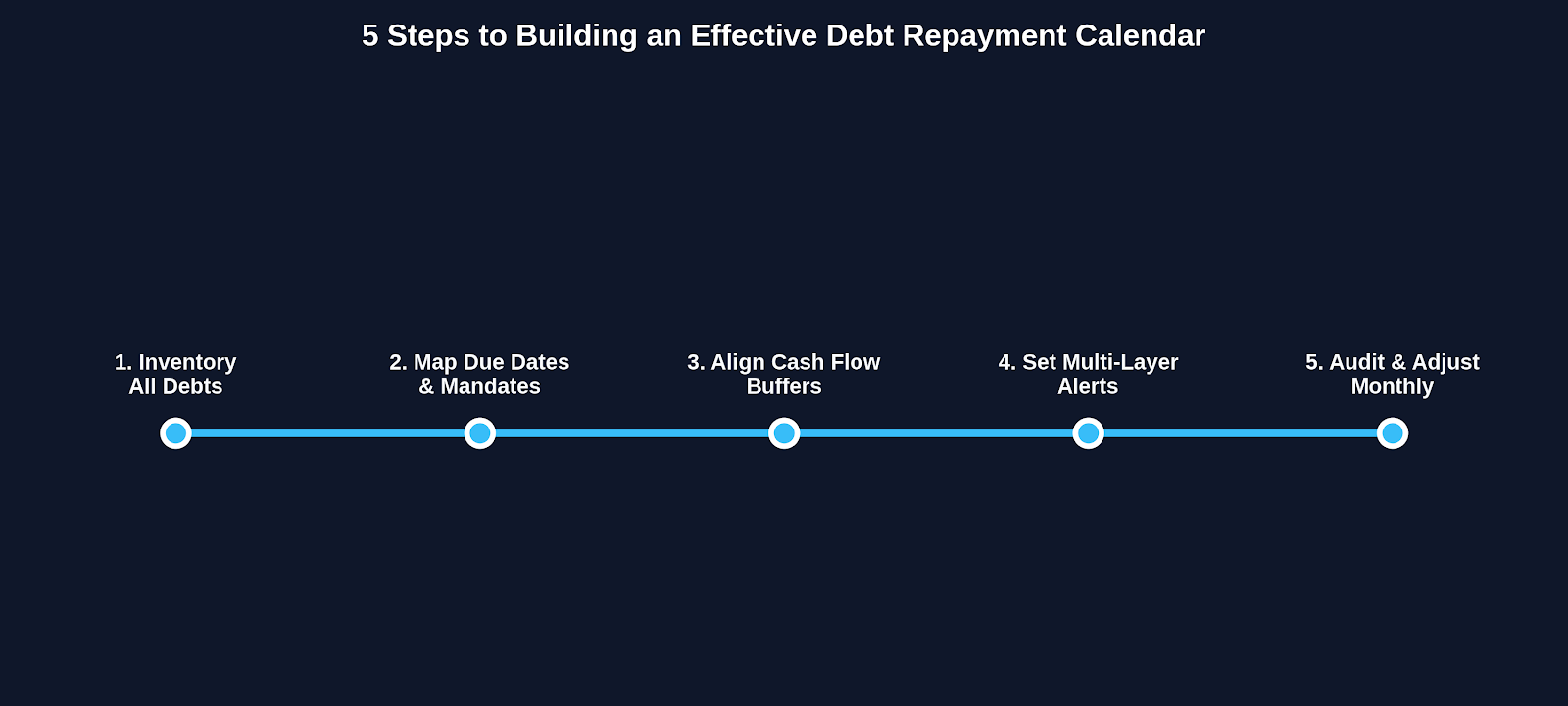
Managing multiple financial liabilities—such as personal loans, credit cards, home loan EMIs, and auto loans—can quickly turn into a confusing juggling act. When payment due dates are scattered across different days of the month, missing a deadline becomes a constant risk.
A single missed EMI or credit card due date triggers immediate penal charges, cheque/NACH bounce fees, and steep interest penalties. Delayed payments are also reported to credit bureaus like TransUnion CIBIL, causing lasting damage to your credit score.
Building a structured Debt Repayment Calendar is the most reliable way to organize monthly obligations, automate cash flow, and ensure you never miss a payment deadline.
Why You Need a Dedicated Debt Repayment Calendar
Relying on mental reminders or fragmented bank SMS alerts often leads to missed deadlines. A centralized debt repayment calendar gives you total visibility over your monthly liabilities.
Key Benefits of a Repayment Calendar:
- Eliminates Late Fees and Penalties: Automates tracking so payments clear before grace periods expire.
- Protects Your CIBIL Score: Ensures consistent, on-time payment records across all credit accounts.
- Optimizes Monthly Cash Flow: Prevents unexpected account overdrafts by aligning debits with your income schedule.
Step-by-Step Guide to Building Your Debt Calendar
Step 1: Inventory All Outstanding Liabilities
Compile a master list of every active credit account. Document the lender’s name, account number, outstanding principal, monthly EMI or minimum due, interest rate, and official payment due date.
Step 2: Map Payment Dates Against Income Inflow
Plot all payment due dates on a calendar. Compare these dates against your salary or primary revenue credit date.
If an EMI debits on the 2nd of the month but your salary credits on the 5th, contact your lender to request shifting your NACH/ECS debit date to avoid default.
Step 3: Implement Automated Clearing Mechanisms
Set up automated standing instructions (NACH/ECS mandates) for fixed EMIs. For variable obligations like credit cards, schedule automated payments 3 to 5 days before the due date to account for processing delays or bank holidays.
Sample Debt Repayment Schedule Framework
| Payment Date | Debt Account | Payment Type | Minimum / EMI Dues | Automation Status |
| 5th of Month | Primary Salary Credit | Income Inflow | — | Automatic Credit |
| 7th of Month | Home Loan EMI | Fixed Debt | Rs. 28,500 | NACH Auto-Debit |
| 12th of Month | Personal Loan EMI | Fixed Debt | Rs. 12,200 | NACH Auto-Debit |
| 18th of Month | Credit Card A | Variable Debt | Total Statement Dues | Scheduled NetBanking |
| 25th of Month | Vehicle Loan EMI | Fixed Debt | Rs. 8,500 | NACH Auto-Debit |
Advanced Strategies to Ensure Zero Default Risk
- Establish a Dedicated Debt Servicing Account: Separate daily spending money from debt obligations. Transfer your total monthly EMI budget into a secondary bank account immediately upon receiving your paycheck.
- Configure Multi-Layered Notifications: Set calendar alerts 7 days, 3 days, and 1 day prior to every payment due date.
- Maintain a One-EMI Cushion Buffer: Keep an extra balance equivalent to one month’s total EMIs in your primary account to prevent NACH bounces during unexpected emergency expenses.
What to Do When Debt Obligations Exceed Your Capacity
While a repayment calendar prevents accidental missed deadlines caused by disorganization, it cannot fix structural financial insolvency. If job loss, business downturns, or medical emergencies leave you mathematically unable to meet scheduled obligations, pushing payments through short-term borrowing will only deepen the crisis.
In cases of genuine financial distress, pursuing a structured debt resolution framework offers a practical and legal way forward.
Partnering with an established loan settlement agency enables distressed borrowers to evaluate structured compromise options under Reserve Bank of India (RBI) guidelines. Professional representatives shield borrowers from unlawful recovery practices while negotiating directly with institutional credit committees.
Engaging dedicated loan settlement services ensures that lenders pause compounding penal charges, halt collection harassment, and evaluate genuine financial hardship documentation through legal banking channels.
Restoring Stability Through Expert Representation
Consulting an experienced loan settlement expert provides vital leverage when mounting default risks threaten your solvency. Through a formal loan settlement agreement, specialists present verifiable proof of financial hardship to negotiate a One-Time Settlement (OTS), securing maximum waivers on accumulated late fees, penal charges, and principal balances while obtaining an official No Dues Certificate (NDC).
Final Thoughts
Building a debt repayment calendar turns chaotic payment schedules into a structured, stress-free routine. By inventorying liabilities, aligning debits with income dates, and automating payments, you protect your credit score and financial peace of mind. If high debt levels ever become unmanageable despite careful tracking, seeking professional debt resolution advisory can help you achieve a legal, lasting recovery.