
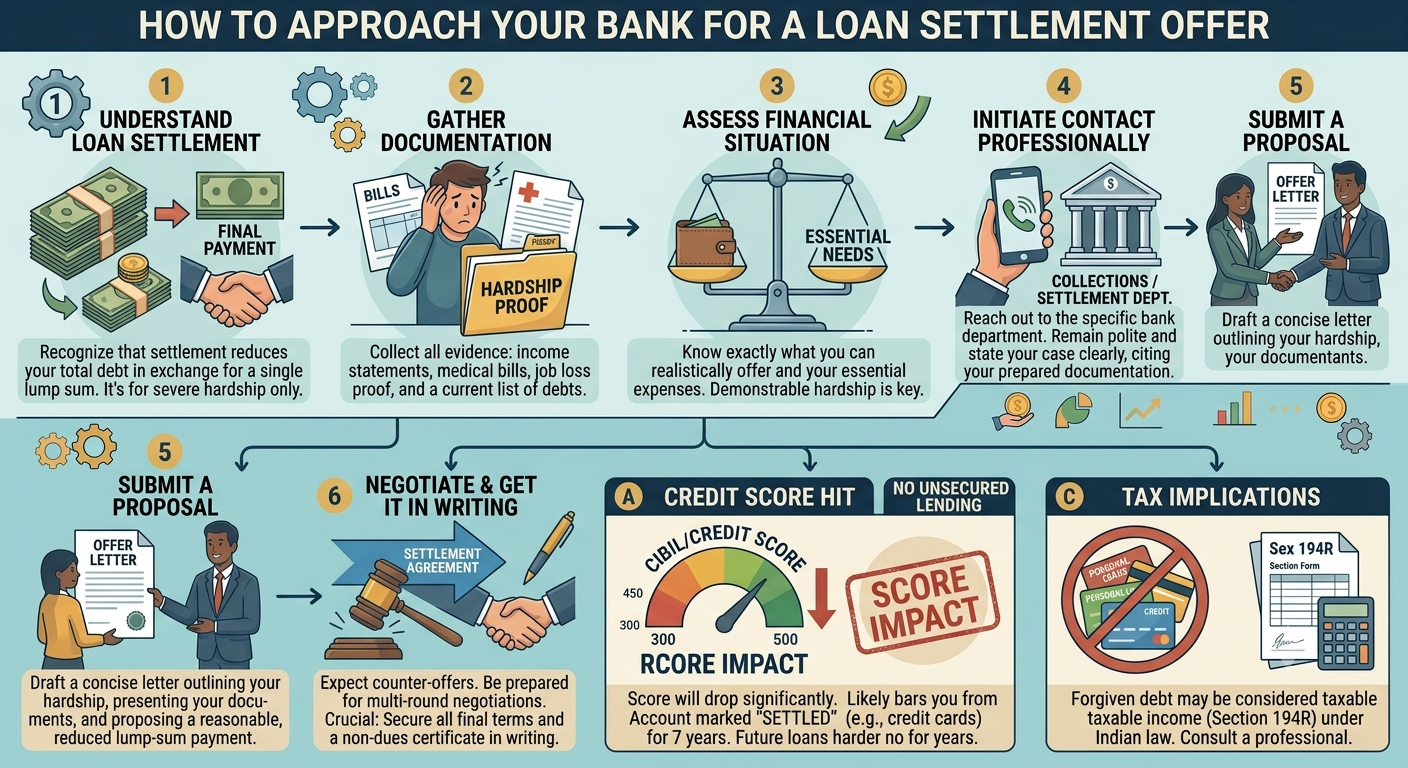
Facing insurmountable debt due to unexpected life events—such as job loss, medical emergencies, or business distress—can leave borrowers struggling to pay monthly Equated Monthly Installments (EMIs). When regular payments become impossible, initiating a formal compromise proposal with your lender becomes a necessary step. However, approaching a bank for a One-Time Settlement (OTS) requires careful preparation, strategic communication, and an understanding of institutional credit evaluation criteria.
Here is a comprehensive guide on how to approach your bank for debt resolution effectively, protect your rights, and secure the best possible terms.
Step 1: Evaluate Your Financial Standing and Pool Capital
Before contacting your lender, conduct a thorough assessment of your finances:
- Audit Total Claims vs. Original Balance: Request an account statement. Distinguish between your original principal balance and accrued interest, late payment penalties, and bounce charges.
- Build a Lump-Sum Fund: Banks almost exclusively grant debt relief for lump-sum One-Time Settlement payments. Secure funds through savings, family support, or liquidation of secondary assets before making your proposal.
- Determine Your Maximum Feasible Offer: Calculate a realistic settlement amount you can pay immediately once sanctioned.
Step 2: Assemble Verifiable Hardship Evidence
Lenders do not grant compromise approvals without proof of genuine distress. Prepare a complete hardship file containing:
- Employment Records: Termination letters, pink slips, or salary reduction notices.
- Medical Proof: Hospital discharge summaries, ongoing treatment bills, or medical certificates.
- Business Loss Statements: Audited financial statements, tax filings, or bank records demonstrating cash flow failure.
- Bank Statements: Demonstrating the absence of liquid income streams over recent months.
Key Communication Guidelines: Do’s and Don’ts
| Recommended Strategy (Do) | Counterproductive Action (Don’t) |
| Maintain Written Records: Submit proposals via formal written letters or official emails. | Rely on Verbal Agreements: Never pay based on phone calls or oral promises from collection reps. |
| Highlight Genuine Distress: Clearly explain your involuntary inability to pay. | Conceal Assets or Income: Hiding details causes banks to label defaults as “willful,” triggering legal action. |
| Insist on Sanction Letters: Require a formal One-Time Settlement letter printed on official letterhead. | Make Partial Payments Early: Avoid making token payments before receiving a signed sanction letter. |
Step 3: Formalize Your Written Settlement Proposal
Draft a clear, professional hardship letter addressed to the Nodal Officer, Recovery Manager, or Credit Committee of your lending institution. Your written application should include:
- Account Identifier: Mention your loan account number and original loan type clearly.
- Statement of Hardship: Briefly explain the circumstances that forced the default.
- Clear Settlement Offer: State the precise lump-sum amount you are prepared to pay to close the account permanently.
- Request for Fee Waivers: Ask for a complete waiver of accumulated penal interest, finance charges, and processing fees.
Step 4: Secure the Official Settlement Sanction Letter
Once the bank’s credit committee accepts your proposal, ensure the agreement is properly documented before transferring funds:
- Verify Official Letterhead: The sanction letter must be printed on official bank stationery and signed by an authorized signatory.
- Confirm Complete Discharge Terms: Ensure the letter explicitly states that paying the agreed sum will satisfy all outstanding obligations in full.
- Check Fee Waiver Explicitly: Confirm that all penal interest, legal charges, and accrued interest are fully waived.
- Obtain No Dues Certificate (NDC): After payment, obtain a formal NDC to confirm the account is legally closed.
Navigating Bank Approvals with Professional Support
Approaching bank credit managers and handling recovery teams while managing personal stress can be challenging. Partnering with experienced advisers ensures your hardship profile is presented effectively and negotiated under regulatory guidelines.
Working with an established loan settlement agency provides immediate protection against aggressive collection calls. A dedicated loan settlement agency handles all legal notices, formal correspondence, and bank meetings on your behalf.
Utilizing comprehensive loan settlement services ensures your outstanding balance is thoroughly audited. Specialized loan settlement services help eliminate unjustified penal charges and negotiate optimal principal discount terms.
Consulting a recognized loan settlement expert strengthens your negotiation position before bank committees. An accredited loan settlement expert evaluates your repayment capacity, safeguards your rights under Reserve Bank of India (RBI) frameworks, and secures structured settlement terms.
Executing a strategic loan settlement brings legal closure to lingering debt liabilities. After paying the negotiated sum, completing a formal loan settlement guarantees you receive an official No Dues Certificate (NDC), halting recovery proceedings permanently.
If mounting debt defaults are creating stress, seeking a structured loan settlement offers a clear path toward financial recovery. Relying on an experienced loan settlement expert and utilizing trusted loan settlement services allows you to resolve your obligations safely and rebuild your financial independence.
Approaching your bank for a loan settlement requires clear evidence of financial hardship, structured communication, and disciplined negotiation. By insisting on written sanction letters and leveraging expert guidance, you can resolve your debts safely and secure long-term financial stability.