
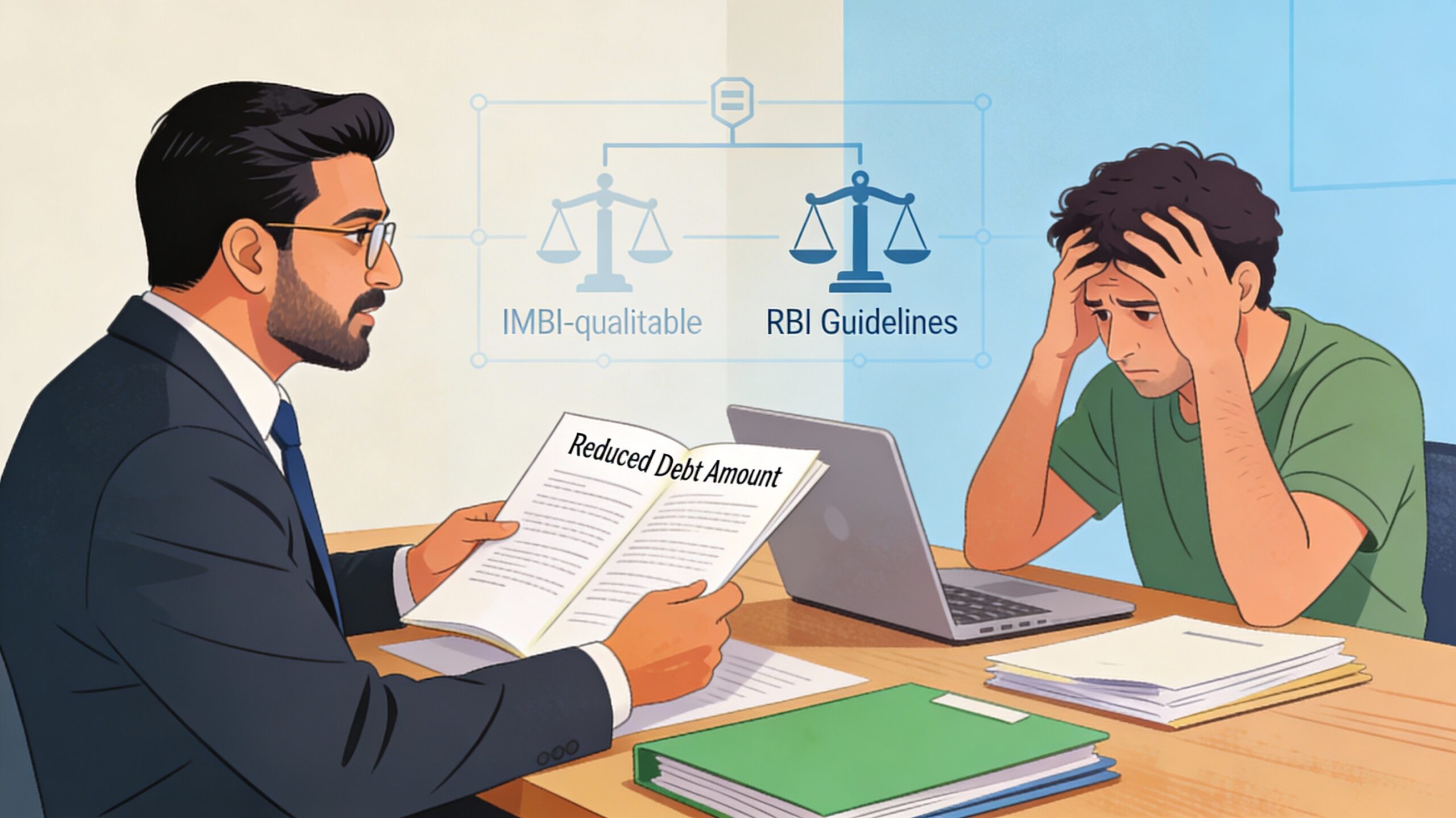
A loan settlement expert can legally reduce your debt burden by negotiating within RBI-approved frameworks so the bank waives part of interest, penalties, and sometimes principal in return for a documented “full and final” closure of your loan. This does not erase your obligations magically, but converts an unmanageable outstanding into a finite amount you can realistically pay while staying within Indian law and RBI guidelines.
What “legal” debt reduction really means
Loan settlement is a negotiated compromise between you and the lender, not a loophole or a way to escape liability. Under RBI’s prudential framework for stressed assets, banks and NBFCs are allowed to use “compromise settlements” as a valid resolution option when a loan has become difficult to recover in full.
In such a compromise settlement, the bank agrees to accept a lower amount than the total due, while you agree to pay this reduced amount within a defined timeline under a written agreement governed by the Indian Contract Act, 1872.
How experts cut interest, penalties, and principal
A loan settlement expert studies how much of your outstanding is pure principal, how much is accumulated interest, and how much is charges and penalties. In many stressed accounts, a large part of the outstanding is interest-on-interest and penalty, which banks are often more willing to waive if they can close the account quickly as per their stressed-asset policies.
Using knowledge of internal bank thresholds and RBI’s stressed-asset resolution framework, experts push for written offers where:
- Penal and extra interest are reduced or waived.
- Part of the base interest and sometimes a slice of principal are written off in return for a lump-sum or short-term payment plan.
The outcome is a lower “settlement amount” that still satisfies the bank’s recovery and compliance requirements while significantly reducing your payable burden.
Protecting you from harassment and illegal practices
One major way experts reduce your mental debt burden is by enforcing RBI rules on recovery conduct. RBI’s Fair Practices Code and recovery guidelines clearly prohibit threats, abuse, odd-hour calls, and physical intimidation, and hold banks responsible for their agents’ behaviour.
A good expert:
- Channels all communication into recorded calls, emails, and letters and challenges harassment using RBI and police complaint routes where needed.
- Demands that only authorised bank officials or properly identified agents interact with you, during reasonable hours and without public shaming or pressure on family or employer.
By stopping illegal pressure tactics, they create a calmer environment for genuine negotiation instead of panic-driven payments.
Ensuring contracts and documentation are legally strong
Debt is only truly reduced when documentation is correct, not just when you transfer money. A loan settlement expert focuses on:
- Getting a settlement sanction on official bank letterhead or authorised email, clearly stating “full and final settlement”, amount, timelines, mode of payment, and no further claims after compliance.
- Ensuring payments are made only to official bank accounts with traceable references, not to individual agents in cash, and collecting receipts, NOC, and closure letters after payment.
These steps rely on contract law and RBI norms, making your reduced liability legally defensible if disputes arise later.
Managing credit score impact and future borrowing
Legal reduction of your debt burden comes with a trade-off: settlements are usually reported to credit bureaus and can affect your score and future loan eligibility for a cooling period. RBI’s compromise-settlement framework itself recognises a minimum cooling period before fresh loans, giving banks time to assess your risk after settlement.
A responsible expert:
- Explains how your account is likely to be reported and how long lenders may wait before offering fresh credit.
- Helps you plan post-settlement steps like maintaining clean bank statements, building savings, and using smaller, well-managed products later to gradually rebuild your credit profile.
When done correctly, this combination of lawful negotiation, harassment control, and careful documentation allows you to legally shrink an overwhelming debt into a manageable, time-bound obligation and then start rebuilding your financial life on a cleaner foundation.