Defaulting on a bank loan or credit card in India is a stressful experience, especially when recovery calls, legal notices, and bank actions begin to escalate. One of the biggest fears for borrowers in financial distress is waking up to find their savings or salary account frozen.
Can a bank legally freeze your bank account after a loan default? What are your rights as a borrower under Indian financial regulations, and how can you protect your livelihood? Here is a detailed breakdown of bank actions, legal boundaries, and borrower rights in India.
Can a Bank Freeze Your Account After Default?
The short answer is yes, but under strict legal conditions and procedures. A bank cannot arbitrarily freeze your account simply because an EMI is overdue.
In India, financial institutions typically exercise control over a borrower’s account through two primary mechanisms:
1. The Right of Set-Off
Under Section 171 of the Indian Contract Act, 1872, banks possess a legal power known as the “Right of Set-Off”. If you have an active savings or deposit account with the same bank where you defaulted on a loan, the bank has the right to transfer funds from your deposit account to adjust against the outstanding debt. However, banks must provide prior notice before exercising this right.
2. Freeze via Legal Orders or Auto-Debit Failures
A bank can freeze or block debit facilities on an account under specific circumstances:
- Section 138 / NACH Bounce: If an auto-debit (NACH/ECS mandate) bounces due to insufficient funds, the bank may initiate legal proceedings under Section 138 of the Negotiable Instruments Act.
- Court or Statutory Orders: A formal account freeze usually requires an order from a competent court, the Debt Recovery Tribunal (DRT), or statutory authorities like Income Tax or Law Enforcement Agencies.
Know Your Rights as a Borrower in India
Even if you default on a loan due to genuine financial hardship, Indian laws and Reserve Bank of India (RBI) guidelines protect your basic rights and dignity. Lenders cannot abuse their power or deprive you of basic survival resources.
1. Right to Notice and Fair Hearing
A bank cannot freeze your account or seize funds without issuing written communication. You have the right to receive advance notice detailing the default amount and the bank’s intent to exercise set-off rights.
2. Protection of Essential Income and Wages
Under Section 60 of the Code of Civil Procedure (CPC), a portion of a borrower’s salary and essential living assets are exempt from attachment. Banks cannot freeze an entire account if it prevents you from meeting basic survival needs like food and shelter.
3. Freedom from Coercive Recovery Practices
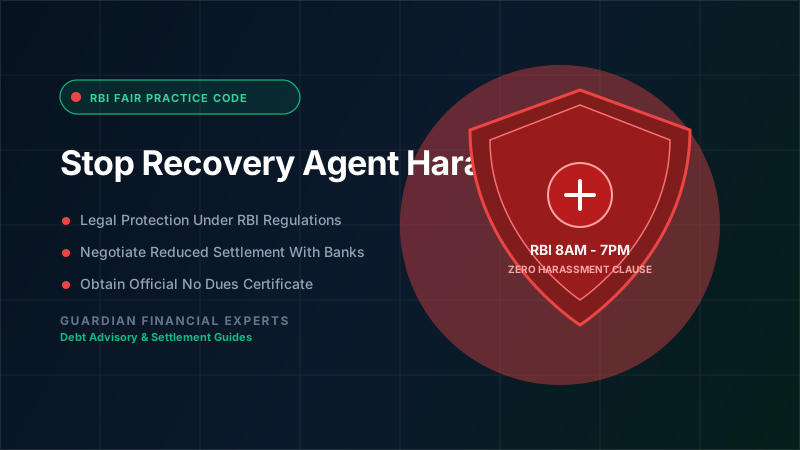
The RBI strictly prohibits recovery agents from harassing borrowers, using intimidating language, contacting you at unreasonable hours (before 8 AM or after 7 PM), or contacting family members and employers.
How to Resolve an Account Freeze and Handle Debt Pressure
If your account has been lien-marked or frozen due to loan default, taking proactive legal and financial steps is essential to restore your access to funds.
If you are struggling with unmanageable debt defaults, partnering with a reliable loan settlement agency can help you navigate bank disputes. Experienced agencies negotiate directly with lenders to lift illegal account blocks and establish reasonable settlement terms.
Professional loan settlement services provide structured legal guidance to ensure banks respect borrower rights under RBI frameworks while stopping harassment from collection agencies.
Reclaiming Financial Stability Through Expert Settlement
Consulting a qualified loan settlement expert allows you to assess your total liabilities and explore formal debt resolution options. Through a structured loan settlement process, you can negotiate a compromise with the lender—often waiving penal interest and late fees in exchange for a mutually agreed lump-sum or structured payment.
Action Plan: What to Do If Your Account Is Frozen
- Submit a Formal Representation: Write a complaint to the Branch Manager requesting immediate unfreezing of funds required for basic living expenses.
- Open an Account in a Different Bank: Keep your regular income or operational funds in a bank where you have no active loan obligations to prevent set-off actions.
- Approach the Banking Ombudsman: If the bank freezes your account without prior notice or refuses to respond to formal complaints, escalate the issue to the RBI Banking Ombudsman.
- Seek Professional Debt Resolution: Address the root cause by resolving the underlying default through structured negotiations rather than leaving the account in perpetual default.
Final Thoughts
Financial hardship is a temporary phase, and loan default is a civil matter—not a criminal offense. Understanding your rights empowers you to challenge arbitrary account freezes, prevent illegal recovery tactics, and negotiate a viable path toward debt freedom.