
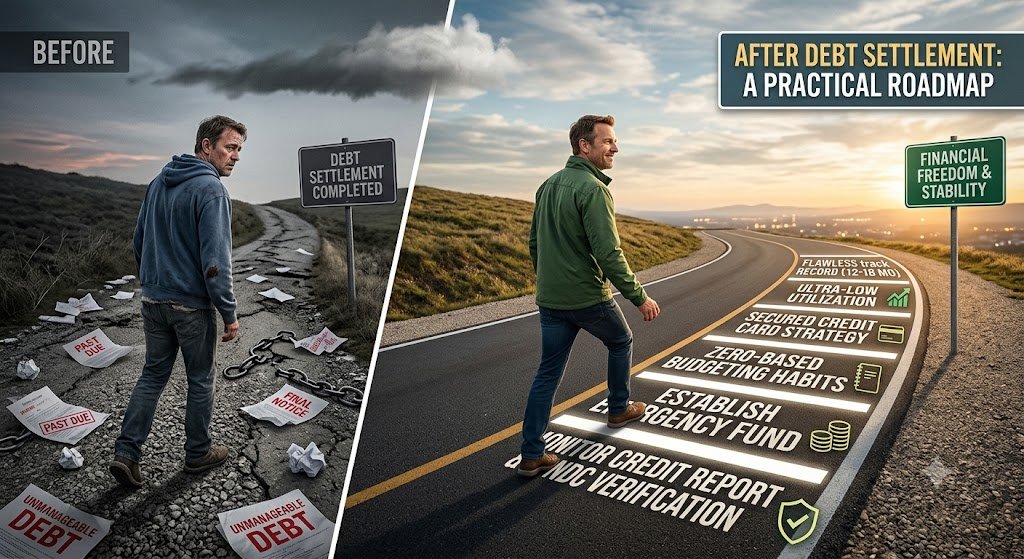
Completing a debt settlement brings immense physical and financial relief. Resolving high-stress defaults, ending constant recovery calls, and eliminating unmanageable liabilities allows you to breathe again. However, settling an outstanding loan is not the final destination—it is the starting point of your financial recovery.
Once the settlement process concludes, your focus must shift toward post-settlement management, rebuilding your credit score, and establishing healthy cash-flow habits. Here is a practical, step-by-step roadmap to guide your financial reconstruction after completing a loan settlement.
1. Secure and Preserve Essential Settlement Documentation
Before focusing on credit repair or long-term investments, you must secure all legal proof confirming your debt is officially resolved.
- Collect the No Dues Certificate (NDC): Within 15 to 30 days of making your final settlement payment, ensure your bank issues an official written No Dues Certificate (NDC) or Non-Crystallization Certificate. This document confirms that the lender holds no further financial claims against you.
- Archive All Payment Proofs: Store bank transaction receipts, Demand Draft counterfoils, and formal settlement sanction letters in a dedicated digital and physical file.
- Keep Documents Permanently: Maintain these documents indefinitely to safeguard against future accounting discrepancies or erroneous collection claims.
2. Monitor and Verify Credit Bureau Reporting
After completing a settlement, credit bureaus such as CIBIL, Experian, and Equifax will update your account status.
- Understand the “Settled” Status: When a bank waives a portion of your outstanding dues, the account status on your credit report changes from “Active/Defaulted” to “Settled”. While this stops legal recovery actions, it briefly impacts your credit score.
- Verify Bureau Updates Within 60 Days: Pull your credit reports 45 to 60 days after making your final payment to confirm that the balance shows zero and the status is accurately updated.
- Rectify Discrepancies Early: If your credit report continues to list the settled account as active or defaulted, file a formal dispute with the bureau, attaching your No Dues Certificate as proof.
3. Work with Professional Guidance for Long-Term Recovery
Navigating post-settlement complications or handling multiple defaulted accounts requires structured strategies. Partnering with an established loan settlement agency ensures that your transition out of debt is legally watertight.
Professional loan settlement services extend beyond mere negotiation; they assist borrowers in verifying final account closure terms and confirming that lenders update their internal systems correctly.
Rebuilding Financial Health with Expert Support
Consulting an experienced loan settlement expert provides clarity on managing lingering debt issues and setting realistic credit restoration timelines. Through a properly executed loan settlement strategy, you avoid common post-settlement pitfalls, ensuring that old debt obligations do not resurface to jeopardize your future financial goals.
4. Implement a Disciplined Post-Settlement Financial Strategy
Rebuilding financial stability requires restructuring daily money habits to prevent future debt traps.
Build a 3-to-6-Month Emergency Fund
Prioritize accumulating liquid cash reserves in a high-yield savings account or fixed deposit. Having a dedicated emergency buffer prevents you from relying on high-interest credit cards or personal loans during unexpected income interruptions or medical emergencies.
Operate on a Cash-Based Budget
Transition to a strict zero-based budget. Categorize your net monthly income into essential operating expenses (housing, utilities, groceries) and savings. Avoid discretionary spending until your emergency reserve is fully funded.
5. Strategic Steps to Rebuild Your Credit Score
While a “settled” mark initially lowers your credit score, consistent financial discipline can rebuild your score over 12 to 24 months.
- Obtain a Secured Credit Card: Apply for a credit card backed by a Fixed Deposit (FD). Secured cards do not require strict credit score checks.
- Maintain Ultra-Low Credit Utilization: Keep your monthly spending below 30% of your secured card’s limit and pay the full statement balance on time every month.
- Avoid Repeated Loan Applications: Refrain from applying for multiple unsecured loans or credit cards immediately after settlement, as frequent hard inquiries hurt your credit profile.
- Build a Clean Payment History: 12 to 18 consecutive months of flawless, on-time payments on a secured card will steadily push your credit score back into positive territory.
Moving Forward with Confidence
A loan settlement offers a crucial second chance to reclaim control of your financial life. By securing your legal closure documents, monitoring your credit reports, and building healthy budgeting habits, you can overcome past debt challenges and construct a secure financial future.