
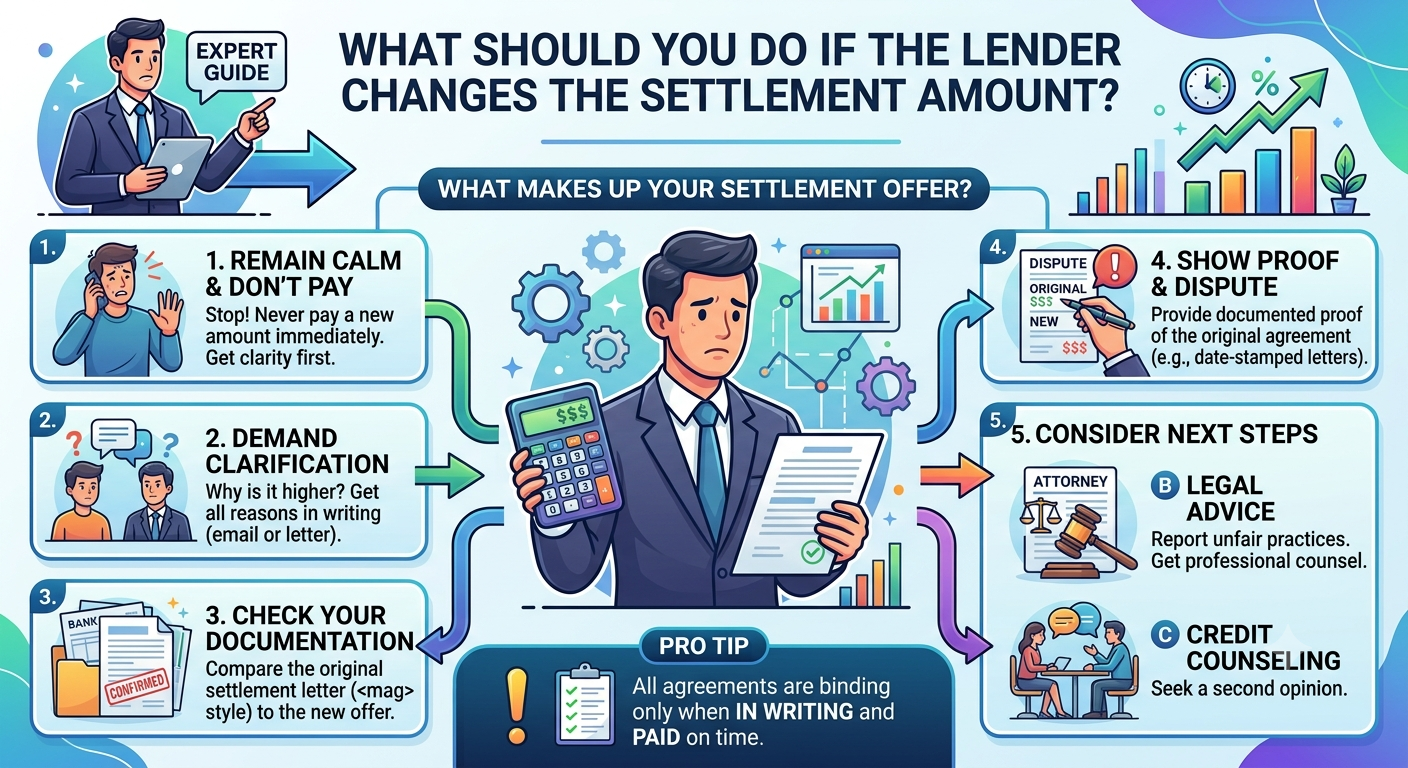
Negotiating a One-Time Settlement (OTS) brings immense relief to borrowers struggling with defaulted loans, credit card balances, or mounting penal fees. However, few situations are as frustrating or disorienting as having a lender suddenly increase, alter, or revoke an agreed-upon settlement figure mid-way through the process.
Whether caused by internal miscommunication, changes in bank credit committees, or aggressive collection agency tactics, mid-negotiation amount changes can derail your path to debt freedom.
Understanding why lenders change settlement amounts—and knowing the exact legal and procedural steps to protect yourself—ensures you don’t pay a single rupee extra.
Why Lenders Try to Change Agreed Settlement Amounts
To effectively tackle a sudden change in settlement figures, it helps to understand why banks or Non-Banking Financial Companies (NBFCs) pull back on agreed terms:
+-------------------------------------------------------------------------------+
|                 COMMON REASONS FOR SETTLEMENT AMOUNT CHANGES                  |
+-------------------------------------------------------------------------------+
| 1. Unauthorized Verbal Offers --> Recovery agents promise unapproved discounts|
| 2. Expired Payment Windows   --> Borrower missed payment deadline on Sanction  |
| 3. Committee Level Rejection --> Zonal/Regional Credit Panel rejects field quote|
| 4. Portfolio Transfer Risks  --> Account shifted to 3rd party agency or ARC   |
+-------------------------------------------------------------------------------+
The most frequent culprit is relying on verbal promises. Collection agents often pitch low settlement numbers verbally to secure quick partial token deposits. Once the token money is deposited, the bank’s internal credit committee rejects the verbal figure, demanding a higher payment.
Step-by-Step Action Plan: How to Handle an Amount Change
If your lender or recovery agency tries to increase the settlement figure, take these structured steps immediately:
1. Audit Your Documentation: Verbal vs. Written
Check if you possess an official, written Settlement Sanction Letter printed on the bank’s official letterhead.
- If you have a valid Sanction Letter: The lender cannot arbitrarily increase the amount during the validity period stated in the letter, provided you meet the payment deadline.
- If you relied on verbal claims or email/WhatsApp notes: The bank is not legally bound by agent promises. You must immediately pause further payments and formalize negotiations through proper channels.
2. Request an Itemized Statement of Account (SOA)
Demand an updated Statement of Account. Inspect whether the increased figure is due to newly added penal interest, late payment fines, or auto-debit bounce fees accrued after default. In any settlement negotiation, your target remains a 100% waiver of penal fees alongside a reasonable discount on the core principal balance.
3. Submit a Formal Hardship Escalation Letter
Draft a written complaint addressed to the bank’s Principal Nodal Officer (PNO) and Nodal Escalation Desk. Attach copies of prior correspondence, hardship records (such as medical bills, job loss notices, or tax records), and proof of any token payments made. Highlight that arbitrary amount revisions breach fair lending practices.
4. Insist on a Revised Written Sanction Letter
Never deposit additional funds based on promises that “the remaining balance will be waived later.” Only remit payment once you hold a revised, official Settlement Sanction Letter detailing the final compromised sum, explicit due dates, and confirmation of complete debt discharge upon receipt.
5. Escalate to the RBI Banking Ombudsman if Needed
If a bank revokes a formal written sanction letter without valid cause, or attempts forced recovery after receiving agreed settlement funds, file an official grievance with the Reserve Bank of India (RBI) Integrated Ombudsman.
Settlement Dispute Resolution: Verbal Promise vs. Official Sanction
| Parameter | Verbal / Agent Offer | Official Settlement Sanction Letter |
| Legal Validity | None (Non-binding) | Enforceable & Legally Binding |
| Protection Against Revision | Zero protection | High protection (within validity period) |
| Recourse Options | Limited | RBI Ombudsman / Consumer Forum |
| Required Action | Pause payment & demand written letter | Remit funds on time & secure NDC |
Essential Resources for Resolving Settlement Disputes
Handling bank escalations, auditing statement changes, and protecting yourself against improper recovery tactics require specialized guidance. Explore these essential resources for expert assistance:
- Consult an experienced loan settlement expert to evaluate disputed settlement letters and agent notices.
- Resolve recovery agency disputes and manage bank escalations with professional loan settlement services.
- Understand borrower rights and settlement negotiation steps via complete loan settlement guides.
- Protect yourself against unfair demand revisions by partnering with a trusted loan settlement agency.
- Review your loan statements and penal charge additions alongside a certified loan settlement expert.
- Eliminate illegal bounce fees and secure principal waivers through specialized loan settlement services.
- Manage legal notices and regulatory complaints supported by an established loan settlement agency.
- Learn about RBI fair practices codes and compromise guidelines with clear loan settlement advice.
- Resolve credit card and personal loan default disputes with assistance from a skilled loan settlement expert.
- Obtain institutional representation during credit committee discussions using dedicated loan settlement services.
- Secure an official No Dues Certificate (NDC) and full legal closure through a reputable loan settlement agency.
Final Thoughts
A sudden increase in your settlement amount can feel disheartening, but you don’t have to accept arbitrary changes blindly. By insisting on written communication, verifying sanction letters, escalating disputes through official nodal officers, and seeking expert support, you can hold lenders to fair terms and achieve lasting financial recovery.