
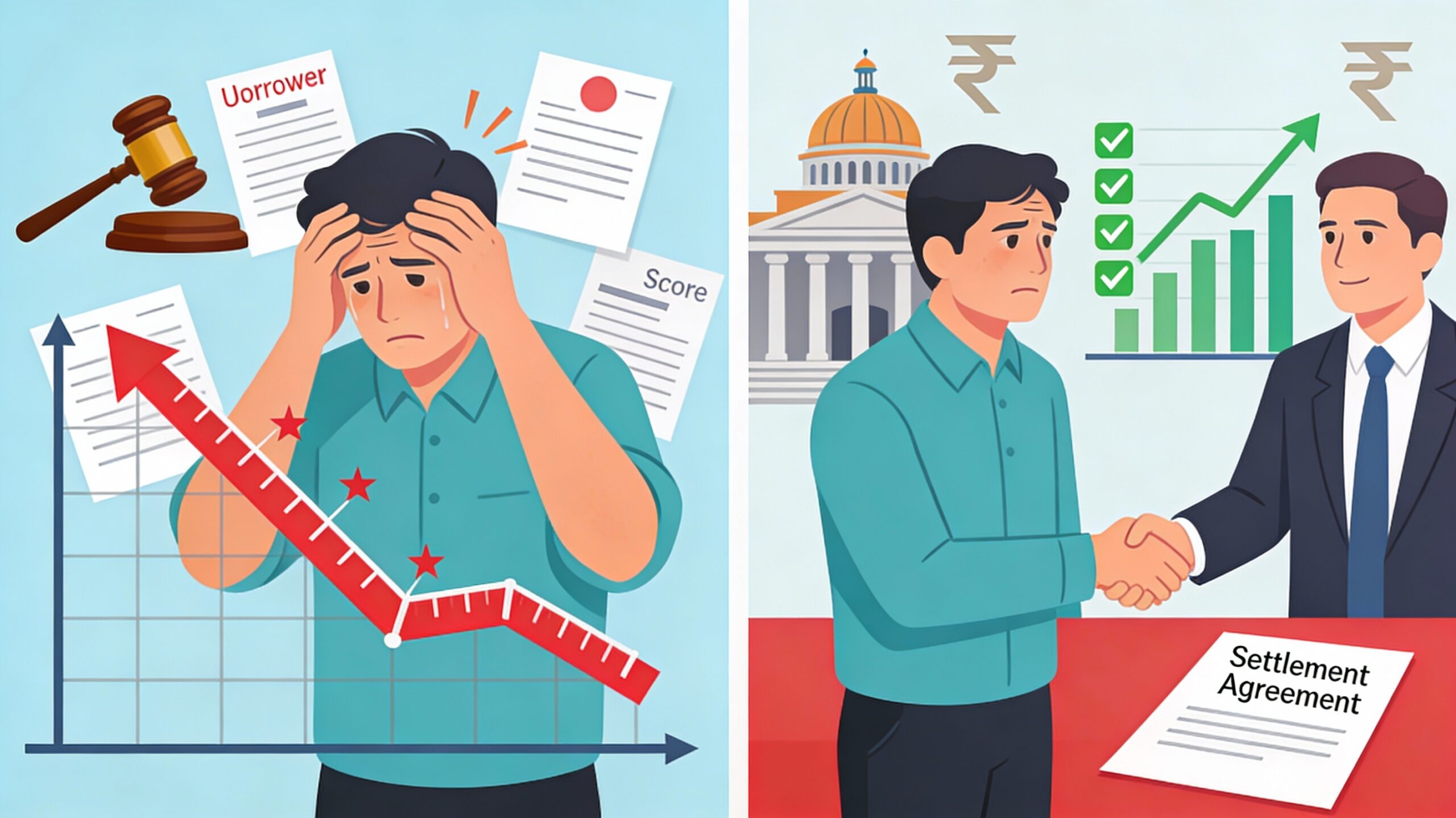
Defaulting on a loan in India triggers legal, financial, and reputational consequences, but a well-structured settlement can contain the damage and provide a lawful exit route. Understanding both sides—the risks of default and the protections available through settlement—helps borrowers make calmer, more strategic decisions.
What Counts as Default in India
A borrower is treated as a defaulter when EMIs remain unpaid beyond the due dates and arrears typically cross 90 days, after which the account is tagged as a Non-Performing Asset (NPA). Lenders may then escalate from reminders to formal legal recovery mechanisms as allowed under Indian law.
- If dues remain unpaid for about 180 days, lenders can send legal notices and start formal proceedings for recovery.
- Defaults are reported to credit bureaus like CIBIL, leading to a sharp fall in the borrower’s credit score and future loan eligibility.
Legal Framework Around Loan Default
Loan default is generally treated as a civil matter, meaning non-payment alone does not automatically send a borrower to jail. However, several laws allow lenders to enforce recovery and, in cases of fraud or wilful default, pursue criminal action.
- For secured loans, lenders can invoke the SARFAESI Act, 2002, which lets them take possession of and auction secured assets without going through a regular civil court.
- For larger dues, banks may approach Debt Recovery Tribunals (DRTs) under the RDDBFI Act, 1993, or use the Insolvency and Bankruptcy Code (IBC) in business or high-value cases.
Civil, Criminal Risk and Borrower Rights
Where post-dated cheques bounce or there is cheque misuse, lenders may file cases under Section 138 of the Negotiable Instruments Act after prolonged non-payment. Only when there is cheating, misrepresentation, or deliberate diversion of funds can sections like 406 or 420 of the Indian Penal Code be used for criminal prosecution.
- RBI guidelines require lenders and recovery agents to follow ethical practices, avoiding harassment, abusive calls, or threats; borrowers can complain to the bank or the RBI Ombudsman if these norms are violated.
- Even during SARFAESI or DRT action, borrowers have rights to receive notices, raise objections, seek valuations, and appeal to higher forums such as DRAT.
How Loan Settlement Fits In Legally
Loan settlement is a negotiated agreement where the lender agrees to accept a reduced amount in full and final discharge of the dues. It is not a statutory right, but operates within contract law, RBI directions, and each bank’s board-approved compromise policies.
- Under RBI’s settlement and compromise guidelines, banks can agree to one-time settlements, including in certain wilful or fraud-tagged accounts, provided they follow documented internal policies and cooling-off periods before any fresh lending.
- The settlement agreement, once signed and executed, becomes legally binding under the Indian Contract Act, 1872, so terms like amount, timeline, and closure conditions must be clearly recorded.
How Settlement Helps a Defaulter
A negotiated settlement can significantly cut legal risk, emotional stress, and long-term financial damage—if handled correctly. While it does hurt the credit score in the short term, it also brings finality and stops the meter on spiraling interest and charges.
- Settlements often close between roughly 60–80% of the total outstanding, depending on the loan type, collateral value, and the borrower’s hardship story.
- Once the agreed amount is paid and a No Dues Certificate and closure letter are obtained, lenders usually halt legal proceedings and update the account as “settled” with bureaus, after which the borrower can slowly rebuild credit through disciplined behavior.
In practical terms, settlement acts as a legal safety valve: it does not erase the fact of default, but it caps liability, reduces ongoing legal exposure, and gives borrowers a structured path to move from crisis toward eventual financial rehabilitation.