
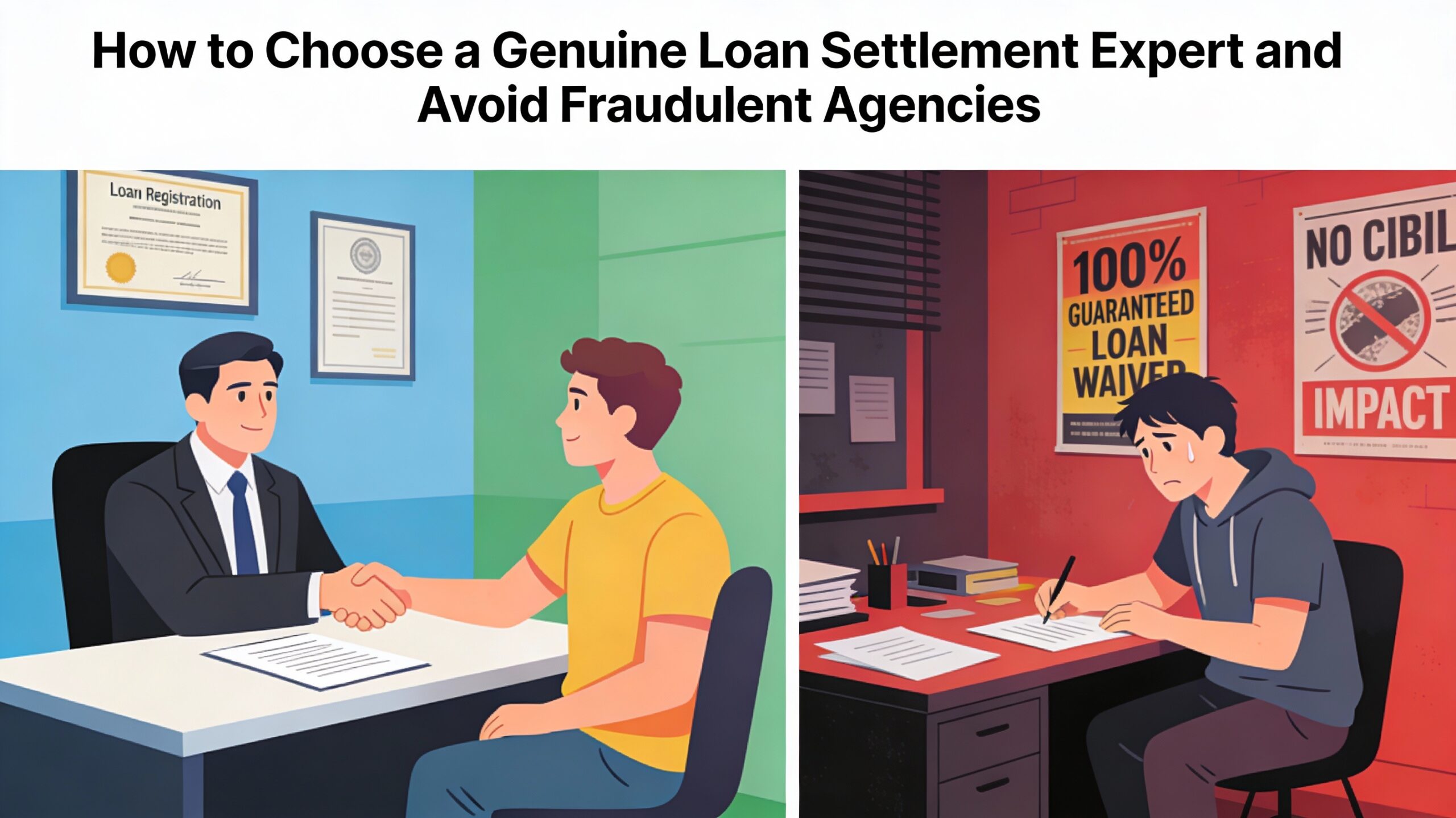
A genuine loan settlement expert can be a powerful ally in resolving unmanageable debt, but the wrong agency can leave you with more problems than you started with. Because loan stress makes borrowers vulnerable, learning how to spot real professionals and avoid fraud is critical.
Red Flags: How Fraudulent Agencies Trap Borrowers
Fraudulent “settlement” outfits often rely on big promises and pressure tactics instead of transparent, documented work.
- They guarantee fixed waivers like “70–90% off for sure” or claim “no impact on CIBIL at all” regardless of your case.
- They push for large upfront fees before any written offer from your bank and resist putting their own scope of work and refund terms in a proper agreement.
- They discourage you from talking directly to your lender, asking you to ignore legal notices and recovery calls without giving a clear written strategy.
If an agency is focused more on collecting fees quickly than on understanding your documents, income, and legal position, that is a serious warning sign.
Essential Qualities of a Genuine Expert
A genuine loan settlement expert behaves like a regulated professional, not a call-centre salesperson.
- Clear identity and presence: They have a proper website, office address, GST or professional registrations, and traceable contact details—not just WhatsApp numbers and social media ads.
- Professional background: The team typically includes or works closely with advocates, ex‑bankers, or credit counsellors who understand lending, recovery, and documentation.
- Transparent communication: They explain the process, risks, and impact on your credit report in simple language, and do not hide the fact that settlement usually hurts your credit score.
Real experts talk in terms of “possibilities” and “ranges”, never guaranteed outcomes, because final decisions always rest with your lender.
What a Legitimate Engagement Should Look Like
Before any actual negotiation begins, a genuine service will follow a structured onboarding process.
- Case assessment first, fees later: They thoroughly review your loan statements, income, expenses, and hardship documents, then tell you whether settlement or restructuring even makes sense in your situation.
- Written service agreement: You receive a formal agreement detailing services (negotiation, documentation review, communication handling), fee structure, payment milestones, and conditions for any refunds.
- No advice to stop paying blindly: If you can still afford partial EMIs, a responsible expert will factor that into strategy instead of simply asking you to default on everything.
You should never feel rushed to sign or pay; if they push you with lines like “offer is valid only today”, treat it like a sales trap.
Smart Due Diligence Steps Before You Sign
Treat choosing a settlement expert like choosing a doctor or lawyer—do some homework.
- Search independent feedback: Look for reviews or complaints on forums, consumer portals, or social platforms. One or two negative comments are normal; patterns of similar complaints are not.
- Ask specific questions: What percentage of your clients actually close with written “full and final settlement” letters? How long do cases typically take? What is their experience with your specific bank or NBFC?
- Demand sample documents: Ask to see anonymised examples of past settlement letters, emails, and No Dues Certificates they helped clients obtain. Genuine firms can usually share redacted samples.
If their answers remain vague or they avoid giving any proof of past work, step back.
Safer Fee Structures and Communication Practices
How an expert charges and communicates tells you a lot about their ethics.
- Balanced fee model: A reasonable model is a smaller onboarding fee plus a success‑linked component tied to actual settlement or reduction achieved, instead of 100% upfront.
- Direct bank documentation: All final offers, settlement letters, and repayment plans must come directly from the lender’s official email or letterhead, not just through the intermediary.
- Consistent written trail: Important instructions, strategy points, and approvals should be documented in email or formal messages, so nothing relies solely on phone calls and verbal assurances.
Avoid anyone who insists “everything happens over phone only” or refuses to let you see or verify communication with the bank.
Practical Checklist to Protect Yourself
Before finalising any loan settlement expert, run through a quick checklist:
- Do they clearly explain the negative impact of settlement on credit score and future loans, or do they brush it aside?
- Is there a proper contract with services, fees, and timelines, or only a one‑page receipt?
- Can you verify their office, team, and at least some independent references?
- Are they willing to let you keep copies of all communication sent to and received from your lender?
If you answer “no” to several of these, it is safer to walk away—even if you are desperate for relief.
Choosing a genuine loan settlement expert is less about finding someone who promises the biggest waiver and more about finding someone who is honest about risks, disciplined with paperwork, and realistic about what your bank will accept. That kind of professional may not offer magical numbers, but is far more likely to guide you to a lawful, documented resolution you can rely on later.