
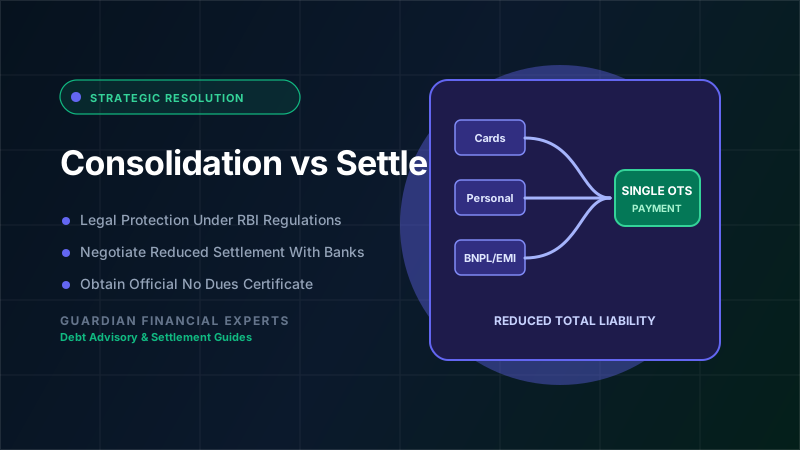
Loan settlement and loan restructuring are two very different paths, and the right choice depends on how deep your financial stress is, how much future credit matters to you, and whether your problem is temporary cash-flow or long-term insolvency. Both can provide relief, but they leave very different marks on your credit profile and future borrowing capacity.
What Is Loan Settlement?
Loan settlement is a negotiated closure where the lender agrees to accept less than the total outstanding as “full and final” payment. This usually happens when the borrower is under severe, documented financial stress and cannot realistically clear the full dues.
- The bank or NBFC may waive part of principal, interest, penalties, or all three, in return for a lump sum or short-term payment schedule.
- In your credit report, the account is typically marked “settled” instead of “closed”, signalling that the lender took a loss and that the loan was not fully repaid as per contract.
What Is Loan Restructuring?
Loan restructuring keeps the loan alive but changes its terms so that it becomes more affordable in the present. This is usually used when the borrower’s difficulty is serious but likely temporary.
- Common restructuring tools include extending tenure, reducing EMIs, temporarily lowering interest, granting moratoriums, or converting overdue interest into a separate term loan.
- On your credit report, a restructured account can be flagged accordingly, but it is still better than a settlement or write-off because you are honouring revised terms rather than walking away from part of the debt.
Key Differences at a Glance
| Aspect | Loan Settlement | Loan Restructuring |
|---|---|---|
| Core idea | Pay less than total due in full and final closure | Keep loan active but make terms easier |
| When used | Extreme distress, insolvency-like situations | Cash-flow stress, temporary income disruption |
| Impact on credit report | Marked as “settled”; strong negative signal | Marked as “restructured”; moderate negative, better than settlement |
| Effect on future loans | Harder to get new credit; higher interest likely | Access to credit usually better than after settlement |
| Payment pattern | Lump sum or short burst of payments | Lower EMIs over a longer period |
| Lender’s perspective | Loss recognised; last-resort recovery | Supportive measure to avoid default and NPA |
When Settlement May Suit You
Loan settlement is more suitable when your financial situation is structurally broken rather than temporarily strained. It is essentially a damage-control move.
- You have lost your main income source or business viability and see no realistic way to maintain even reduced EMIs in the medium term.
- Your unsecured debt (personal loans, credit cards, business loans without collateral) has snowballed to a level where even restructuring will only delay an eventual default, not prevent it.
In such cases, raising a one-time pool of funds (savings, family support, or asset sale) to close the loan at a discount can stop legal escalation and mental stress, even though it scars your credit history for several years.
When Restructuring May Suit You
Restructuring fits better when your problem is affordability today, not absolute inability to pay over time.
- Your income has reduced or become irregular (job change, health event, temporary business slowdown), but you still expect to be able to pay if EMIs are smaller or deferred for a while.
- You want to protect your long-term credit health because you may need future loans for housing, education, or business, and you are willing to pay more interest over time in exchange for breathing space now.
Here, restructuring buys time, lowers immediate pressure, and shows lenders that you are cooperative and serious about repaying—something that can be valuable when you later seek fresh credit.
How to Choose the Right Option
To decide between settlement and restructuring, step back and honestly assess both your current and future capacity.
- If you can see a credible path to steady income and can handle reduced EMIs, restructuring generally preserves more of your financial reputation and options.
- If even reduced EMIs look impossible for years, and you are already staring at or facing default and legal steps, a properly negotiated settlement might be the cleaner, though harsher, reset.
For many borrowers, the guiding question is: “Am I fundamentally able to repay over time if terms are relaxed, or am I trying to escape a debt load that is simply beyond me?” Restructuring aligns with the first reality, settlement with the second. Matching the option to your real situation—rather than wishful thinking—is what ultimately protects both your sanity and your long-term financial life.
Explore Bank-Specific Resolution & Debt Relief Services
Facing debt recovery notices, escalating interest, or multiple EMI defaults? Navigate our authoritative settlement guides and legal resolution procedures tailored for Indian borrowers:
HDFC Bank Loan Settlement
Personal loan & credit card OTS procedures, waiver rules, and recovery resolution.
SBI Loan Settlement Process
State Bank of India compromise settlement, NPA resolution, and Lok Adalat guidelines.
ICICI Bank Loan Settlement
Resolution for overdue credit cards, personal loans, and third-party recovery defense.
Bajaj Finance Debt Settlement
NBFC overdue loan settlement, bounce charges negotiation, and NDC documentation.
Credit Card Settlement Services
Stop 40%+ compounding APR and settle high-balance credit cards with structured waivers.
Personal Loan Settlement
Resolve multiple unsecured loans, fintech apps, and salary defaults with legal protection.
Anti-Harassment Legal Support
Enforce RBI fair practice code to halt abusive recovery calls, threats, and illegal visits.
CIBIL & Credit Score Improvement
Step-by-step roadmap to rebuild credit rating from 'Settled' status back to 750+.
Every loan case is unique. If you are experiencing EMI pressure or receiving recovery notices, our team is available for a confidential consultation.