
Reaching an agreement with a bank or non-banking financial company (NBFC) to settle an outstanding loan is a significant milestone when managing severe financial distress. A One-Time Settlement (OTS) allows borrowers to clear unmanageable liabilities by paying a discounted, mutually agreed-upon lump sum.
However, verbally agreeing to a settlement sum is only half the journey. The written document provided by the bank—commonly known as the Settlement Sanction Letter or Loan Settlement Agreement—is a legally binding contract. Signing an incomplete, ambiguous, or error-ridden agreement can lead to continued collection efforts, hidden fees, or legal disputes.
Before signing on the dotted line, carefully review these critical elements to ensure complete legal protection and permanent debt relief.
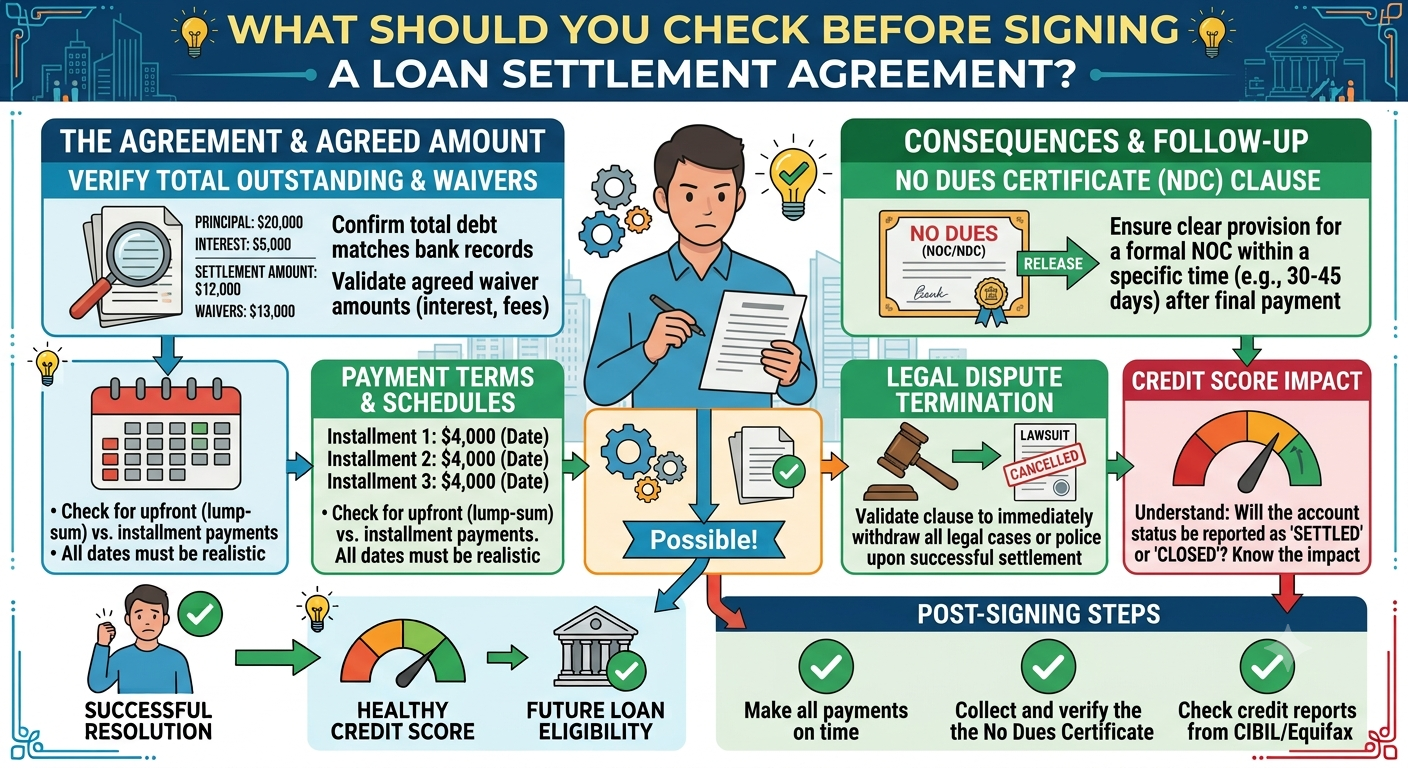
1. Verify the Final Agreed Settlement Amount and Waivers
Ensure the written agreement explicitly states the exact, final compromise amount you have agreed to pay. The letter must clearly outline:
- Principal Amount Waived: The exact percentage or figure forgiven by the bank.
- Interest and Penal Fees Waived: A clear statement that all accumulated penal interest, processing fees, and legal charges are entirely waived upon payment.
- No Hidden Costs: Confirmation that no additional administrative fees or processing charges will be levied later.
2. Confirm Payment Deadlines and Installment Schedules
Settlement agreements strictly enforce payment timelines. If your settlement involves a single lump-sum payment or a few structured installments, ensure the exact dates are manageable. Missing a settlement deadline by even a single day can invalidate the entire agreement, causing the bank to revoke all waivers and reinstate the original, full debt amount.
3. Check Account Reporting Status (CIBIL / Credit Bureaus)
Understand how the bank intends to report the closure to credit bureaus like CIBIL, Experian, or Equifax. While compromised debts are typically updated with a status of “Settled” or “Post-Settlement Closed,” ensure the document reflects that all active legal recovery proceedings and default tracking will cease immediately upon full payment.
4. Ensure Explicit Commitment to Legal Notice Withdrawal
If the bank previously issued legal notices—such as notices under Section 13(2) of the SARFAESI Act, Section 138 Negotiable Instruments Act (cheque bounce), or arbitration proceedings—the settlement agreement must contain a clear clause stating that all pending legal cases and criminal complaints will be unconditionally withdrawn upon receipt of the settlement sum.
5. Issuance Guarantee for the No Dues Certificate (NDC)
The agreement must explicitly state that upon receipt of the final settlement installment, the bank will issue a formal No Dues Certificate (NDC) or No Objection Certificate (NOC) within a specified timeframe (typically 15 to 30 days), accompanied by the return of any post-dated cheques or original property documents held as collateral.
Comprehensive Audit Checklist for Settlement Letters
| Verification Clause | Standard Obligation | Red Flag to Watch Out For |
| Settlement Amount | Fixed, binding discounted total | “Subject to further manager review” clauses |
| Payment Schedule | Explicit dates for each installment | Vague, short deadlines without buffer days |
| Legal Proceedings | Unconditional withdrawal of all cases | Failure to mention pending court/arbitration cases |
| Document Return | Return of collateral/cheques within 30 days | Silence on original property deeds or security cheques |
The Value of Professional Representation Before Signing
Navigating the fine print of banking agreements requires specialized financial and legal knowledge. Banking documents are drafted to protect the institution, making expert verification crucial before you make any payment.
Partnering with a recognized loan settlement agency guarantees that your sanction letter is thoroughly audited. A dedicated loan settlement agency reviews every clause, ensuring there are no hidden traps or ambiguous terms that could leave you vulnerable.
Utilizing comprehensive loan settlement services protects you from predatory terms and incomplete settlement letters. Specialized loan settlement services interface directly with the bank’s legal team to correct errors before you sign or transfer funds.
Consulting an experienced loan settlement expert provides confidence during the final stages of debt discharge. An accredited loan settlement expert ensures that all waivers on principal, interest, and penal fees are legally binding and enforceable.
Executing a verified loan settlement ensures permanent legal relief from overwhelming liabilities. Once the terms of an agreed loan settlement are fulfilled, you receive your official No Dues Certificate (NDC), granting complete financial freedom.
If you have received a settlement offer, seeking a professional loan settlement review prevents future disputes. Working alongside an experienced loan settlement expert protects your rights, while trusted loan settlement services ensure a secure transition toward rebuilding your credit profile.
A loan settlement agreement is your legal shield against future debt claims. By carefully auditing the final settlement amount, payment schedules, legal withdrawal clauses, and NDC guarantees—and seeking expert representation—you can sign with confidence and secure true financial peace of mind.