
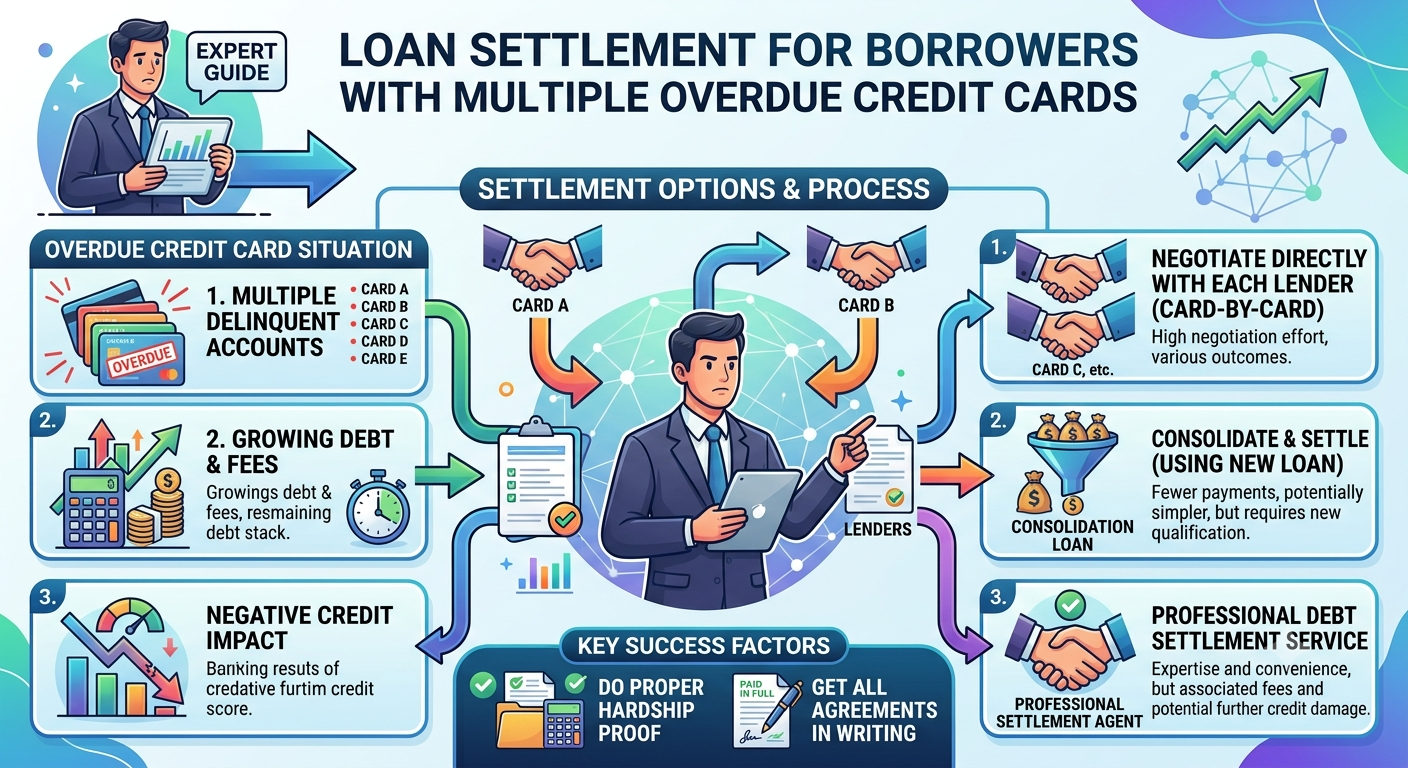
Managing a single overdue credit card is stressful enough, but juggling multiple overdue cards can quickly turn into an overwhelming financial trap. Credit cards carry some of the highest interest rates in the lending industry—often ranging between 36% and 48% annually. When compounding late fees, over-limit charges, and penal interest are added, balances escalate rapidly, making full repayment nearly impossible for borrowers facing financial distress.
For borrowers dealing with default across multiple cards, pursuing a One-Time Settlement (OTS) offers a realistic path toward ending compound interest growth, stopping collection efforts, and resolving debt permanently.
Why Multiple Overdue Credit Cards Escalating Fast
Unlike traditional term loans (such as home or auto loans) where monthly payments remain fixed, credit cards operate as revolving credit lines. When you miss payments on multiple cards simultaneously:
+-------------------------------------------------------------------------------+
|                 THE MULTIPLE CREDIT CARD DEBT TRAP                            |
+-------------------------------------------------------------------------------+
| 1. Initial Missed Payments  --> High penal interest + late payment fines added |
| 2. Multi-Bank Escalation    --> Simultaneous calls from multiple bank desks    |
| 3. Legal/Recovery Notices   --> Section 25 PSSA, arbitration & cheque notices  |
| 4. Compound Debt Growth     --> Balance doubles in short period, triggering NPA|
+-------------------------------------------------------------------------------+
Because unsecured credit cards carry high capital risk for banks, credit card divisions are often far more aggressive with recovery efforts. However, this high-risk nature also makes card issuers willing to consider significant compromise settlements once an account reaches default status.
Step-by-Step Strategy to Settle Multiple Credit Cards
Settling multiple credit cards requires a structured, prioritized approach rather than attempting to resolve all accounts at once without a plan.
1. Audit Statements and Separate Principal from Penal Fees
Obtain official account statements for every card. Calculate the actual unpaid principal balance versus accumulated penal interest, finance charges, and late fees. When negotiating a settlement, your target should always include a 100% waiver of penal interest and late fees, alongside a 30% to 60% discount on the core principal balance.
2. Prioritize Accounts Based on Risk and Balance Size
Categorize your overdue cards:
- High-Risk Accounts: Cards with active legal notices (e.g., payment mandate bounces under Section 25 PSSA) or pending arbitration proceedings should be addressed first.
- Small-Balance Accounts: Settling smaller balances first helps reduce the number of active recovery channels and frees up cash flow to address larger balances.
3. Shift Recovery Communications to Written Channels
When dealing with multiple card issuers, managing daily phone calls from various collection agencies becomes unsustainable. Issue formal written notices to each bank’s Nodal Officer or recovery division requesting that all future communications be conducted via email or postal mail.
4. Never Mix Payments or Pay Without a Formal Sanction Letter
Card collection agents often promise “verbal discounts” if you make a quick partial token payment. Never deposit funds without receiving an official Settlement Sanction Letter printed on bank letterhead. The letter must clearly detail:
- The final agreed settlement amount.
- The payment due date.
- A explicit confirmation that payment full fills the debt obligation with no remaining liability.
- A commitment to withdraw any active legal proceedings.
Comparison: Debt Consolidation vs. Multiple Card Settlement
| Parameter | Credit Card Debt Consolidation Loan | Multiple Credit Card Settlement (OTS) |
| Primary Goal | Combine multiple debts into a single EMI | Extinguish debt via negotiated lump sum |
| Prerequisite | Good credit score & steady income | Documented financial hardship & default status |
| Financial Savings | Moderate (lowers interest rate) | High (30% to 70% overall debt reduction) |
| Credit Report Impact | Minimal / Positive over time | Marked as “Settled” / “Written Off” |
Key Resources for Navigating Credit Card Settlements
Navigating negotiations across multiple bank credit departments, managing legal notices, and verifying sanction letters require dedicated support. Explore these essential resources for expert assistance:
- Consult a certified loan settlement expert to evaluate your multi-card liability and hardship file.
- Stop recovery harassment across multiple banks using professional loan settlement services.
- Learn how to structure multi-bank compromise offers through complete loan settlement guides.
- Safeguard your legal rights and handle recovery demands by partnering with a trusted loan settlement agency.
- Review your card statements and penal interest calculations alongside an experienced loan settlement expert.
- Eliminate late payment fines and secure principal discounts through specialized loan settlement services.
- Coordinate legal case withdrawals and respond to notices with support from an established loan settlement agency.
- Understand RBI guidelines and settlement frameworks via clear loan settlement advice.
- Resolve high-interest credit card debt traps with help from a skilled loan settlement expert.
- Obtain institutional representation during multi-bank discussions using comprehensive loan settlement services.
- Secure official No Dues Certificates (NDCs) for every card account with an experienced loan settlement agency.
Final Thoughts
Dealing with multiple overdue credit cards can feel overwhelming, but you do not have to remain trapped in compound interest. By auditing your account statements, prioritizing high-risk accounts, insisting on formal sanction letters, and seeking expert guidance, you can negotiate manageable settlements across all card accounts and rebuild your financial independence.