
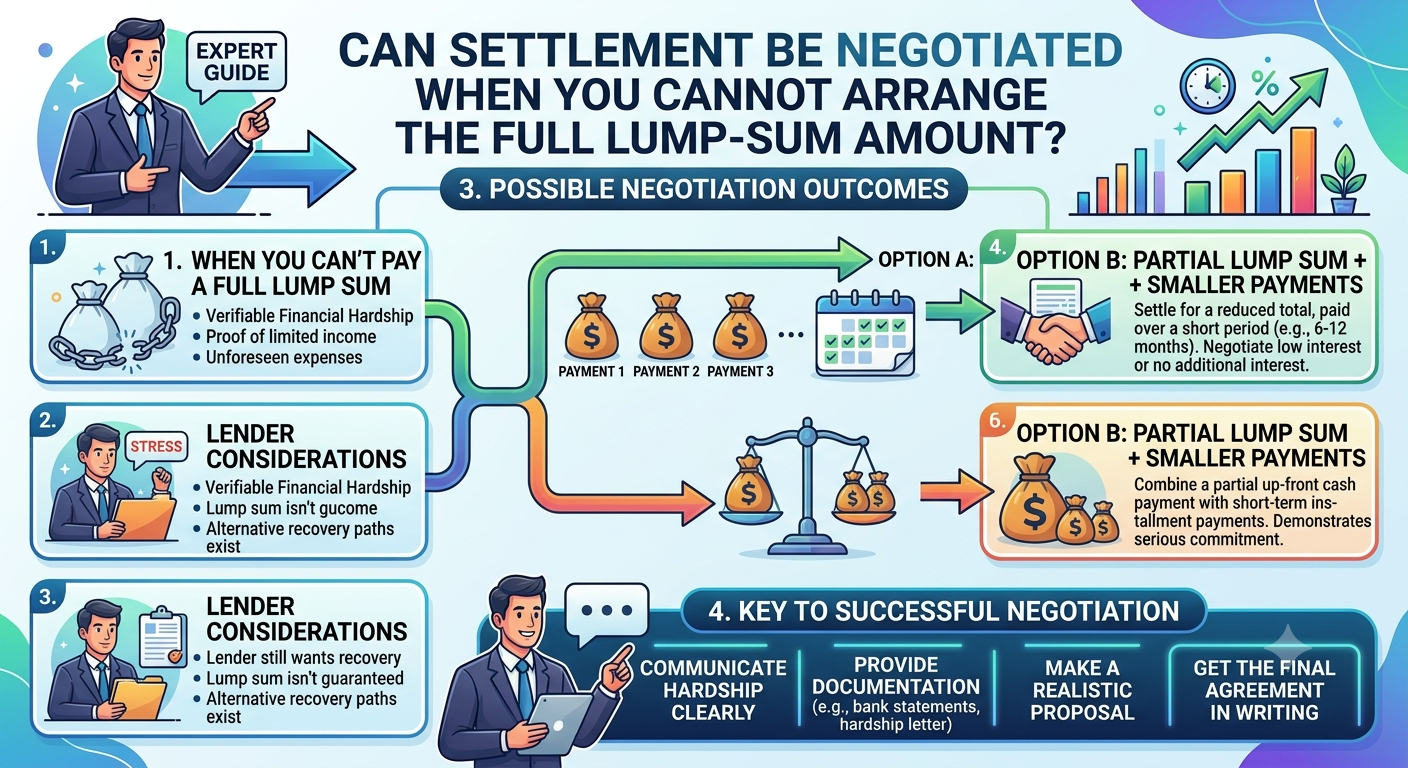
When facing severe financial hardship, borrowers often explore a One-Time Settlement (OTS) to clear defaulting debt. Typically, banks and Non-Banking Financial Companies (NBFCs) push for a single, full lump-sum payment in exchange for waiving accumulated penal interest and a percentage of the principal.
However, if you are struggling with low income, job loss, or medical bills, coming up with a large lump-sum payment within 7 to 30 days can feel practically impossible.
This brings up an important question: Can you still negotiate a loan settlement if you cannot arrange the full lump-sum amount immediately?
The short answer is yes. Lenders frequently agree to multi-installment settlements or structured payment plans when presented with a well-documented financial case.
Understanding the Multi-Installment Settlement (Structured OTS)
While banks naturally prefer single lump-sum payments to clear Non-Performing Assets (NPAs) quickly, regulatory frameworks and internal bank recovery policies allow for Structured Settlements.
+-------------------------------------------------------------------------------+
|                    STRUCTURED SETTLEMENT WORKFLOW                             |
+-------------------------------------------------------------------------------+
| Stage 1: Document Hardship & Present Income Proof                            |
| Stage 2: Audit SOA to Remove Penal Fees & Freeze Interest                     |
| Stage 3: Propose 2 to 6 Tranche Installment Plan                              |
| Stage 4: Secure Multi-Tranche Settlement Sanction Letter                     |
| Stage 5: Pay Final Tranche & Receive No Dues Certificate (NDC)               |
+-------------------------------------------------------------------------------+
In a structured OTS, the lender freezes the total negotiated balance and allows the borrower to clear the agreed amount over 2 to 6 monthly installments (tranches). This setup gives borrowers breathing room while giving the bank a clear, reliable schedule to recover funds.
How to Negotiate an Installment Settlement with Your Lender
If you cannot raise a lump-sum amount right away, follow these practical steps to negotiate a structured payment schedule:
1. Prove Your Financial Constraints with Documentation
Lenders do not grant installment plans based on verbal requests alone. You need to show concrete proof of your financial situation, such as salary reduction notices, business loss statements, or high medical expenses. Clear documentation helps convince the credit committee that an installment plan is your only realistic path to repayment.
2. Request a Freeze on Further Interest and Penalty Charges
Before agreeing to an installment plan, make sure the lender explicitly freezes all additional charges. Without a written freeze, ongoing penal interest and late fees will keep adding up every month, quietly undermining your settlement effort.
3. Propose a Realistic 2 to 6 Month Payment Schedule
Offer a practical repayment plan divided into equal monthly tranches. For instance, if the negotiated settlement amount is $3,000, propose paying $1,000 per month across three consecutive months. Make sure the proposed timeline is one you can comfortably stick to—missing an installment can cause the bank to cancel the sanction letter and revert to demanding the full original balance.
4. Audit Your Statement of Account (SOA)
Always request an official Statement of Account from your bank. Separate your original unpaid principal balance from accumulated penal interest, late payment fines, and bounce fees. Your negotiation target should always include a 100% waiver on penal charges alongside a reasonable reduction in the base principal.
5. Secure a Multi-Tranche Settlement Sanction Letter
Never make any partial payments based on verbal promises from recovery agents. Demand an official Settlement Sanction Letter on the lender’s letterhead that clearly lists:
- The total negotiated settlement sum.
- The exact dates and amounts for each installment tranche.
- A written commitment that all legal proceedings will be withdrawn and a No Dues Certificate (NDC) issued upon payment of the final tranche.
Single Lump-Sum OTS vs. Multi-Installment Settlement
| Feature | Single Lump-Sum OTS | Multi-Installment Settlement |
| Payment Window | 7 to 30 Days (Single payment) | 2 to 6 Months (Tranche payments) |
| Upfront Cash Required | High | Low to Moderate |
| Discount Potential | Higher principal waiver (up to 50–70%) | Moderate principal waiver (up to 30–50%) |
| Risk of Default | One-time action; low risk after payment | Requires strict discipline across all tranches |
| Account Resolution | Instant closure upon payment | Closed after final tranche payment |
Helpful Resources for Handling Loan Settlement Negotiations
Handling bank negotiations, checking settlement sanction terms, and protecting your legal rights during installment plans can be challenging. Explore these helpful resources for expert support:
- Consult a certified loan settlement expert to evaluate your installment options and hardship file.
- Manage recovery calls and set up multi-tranche plans with professional loan settlement services.
- Learn how to structure payment proposals using comprehensive loan settlement guides.
- Protect your legal rights and prevent harassment by partnering with a trusted loan settlement agency.
- Review your loan statements and penal charges alongside an accredited loan settlement expert.
- Waive late fees and secure principal discounts through specialized loan settlement services.
- Coordinate court case withdrawals and handle legal notices with an established loan settlement agency.
- Understand bank compromise frameworks and RBI guidelines with clear loan settlement advice.
- Resolve high-interest credit card and personal debt traps with assistance from a skilled loan settlement expert.
- Get professional representation during bank meetings with dedicated loan settlement services.
- Secure an official No Dues Certificate (NDC) and full legal closure through a reputable loan settlement agency.
Final Thoughts
Not having a full lump-sum payment right away does not close the door to resolving your debt. By documenting your financial situation, proposing a clear installment schedule, demanding a written sanction letter, and seeking professional guidance, you can negotiate a manageable settlement plan and take control of your financial future.