
Carrying an old, defaulted personal loan for years can feel like an endless dark cloud over your financial life. What starts as a temporary financial setback often turns into years of compounding interest, inflated penal charges, persistent recovery notices, and long-term damage to your credit score.
If you have an old personal loan that has gone unpaid for two, three, or even five years, a critical question arises: Is it still possible to settle the debt with the bank, or is it too late?
The short answer is yes. In fact, aged personal loans that have remained unpaid for years are often the most prime candidates for a negotiated One-Time Settlement (OTS).
Why Banks Want to Settle Old, Aged Personal Loans
When an unsecured personal loan remains unpaid past 90 days, the bank classifies it as a Non-Performing Asset (NPA). As months turn into years, the institution eventually writes off the debt from its active balance sheet, categorizing it as a Loss Asset.
+-------------------------------------------------------------------------------+
|                      AGED UNSECURED DEBT RECOVERY LIFE CYCLE                  |
+-------------------------------------------------------------------------------+
| Standard Account (0-90 Days Overdue)   | Regular EMI Collections              |
| Non-Performing Asset (90-180 Days)     | Recovery Notices & Tele-Calling       |
| Written-Off / Loss Asset (1+ Years)    | Compromise Settlement Window Opens   |
+-------------------------------------------------------------------------------+
While a write-off does not mean your debt is legally forgiven, it changes the bank’s internal priority:
- Provisioning Relief: Holding old loss assets forces banks to freeze regulatory capital. Reaching a settlement releases tied-up provisions back into the bank’s operational capital.
- Cost-Benefit of Litigation: Personal loans are unsecured debts without underlying physical collateral. Pursuing prolonged legal proceedings or civil suits in court often costs more in legal fees than the bank stands to recover.
- Immediate Balance Sheet Profit: Because the bank has already written off the debt in its ledger, any lump-sum recovery made through an OTS goes directly into the bank’s bottom-line recovery profits for the current quarter.
Key Obstacles When Settling Aged Personal Loans
While lenders are generally willing to negotiate old personal loans, borrowers must navigate specific risks attached to aged accounts:
- Inflated Total Balances: Over several years of default, original loan balances often triple due to accumulated penal interest, late fees, and processing charges. Negotiations must focus on waiving these artificial penalties completely and discounting the base principal balance.
- Third-Party Recovery Agencies: Old bad debts are frequently handed over to third-party collection agencies. Agents may offer unverified verbal discounts to collect funds; paying based on verbal promises without an official letter is a major financial risk.
- Statute of Limitations Awareness: Depending on jurisdictional debt laws, lenders generally have a three-year limitation window from the default date to file civil recovery lawsuits. However, making a partial payment or signing an acknowledgment of debt resets this legal clock.
Step-by-Step Approach to Settling an Old Personal Loan
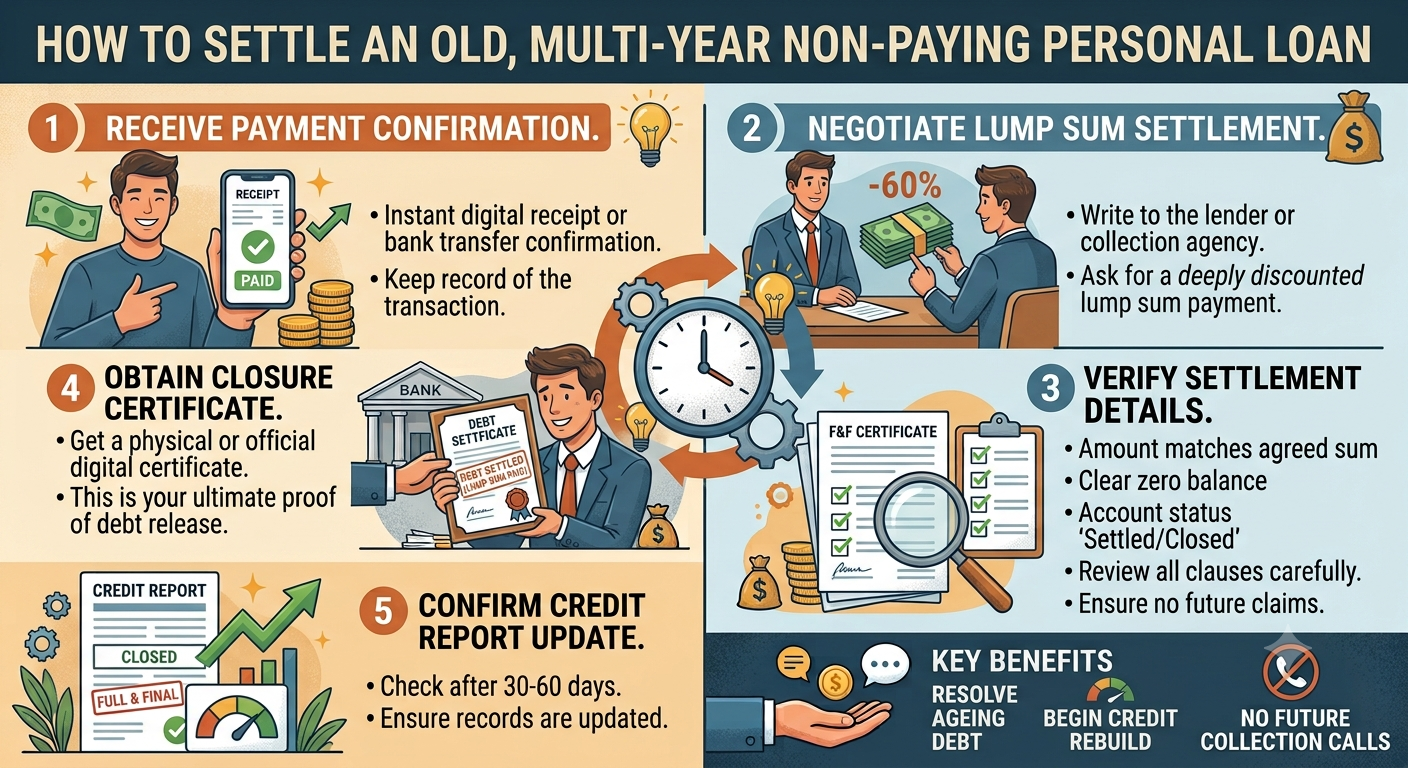
To ensure your old debt is settled legally and permanently, follow a structured settlement roadmap:
Step 1: Request an Official Statement of Account (SOA)
Obtain an official, itemized statement directly from the bank’s home branch or Nodal Officer. Separate the base principal balance on the default date from compounding penal interest and late fees.
Step 2: Assemble Financial Hardship Evidence
Lenders must verify that non-payment was caused by genuine, involuntary distress rather than willful default. Compile documentation such as past job termination letters, salary cuts, medical emergency records, or business closure proofs.
Step 3: Present a Written Settlement Proposal
Submit a formal compromise proposal offering a realistic lump-sum settlement sum (typically starting around 25% to 40% of the overall claim) contingent upon a 100% waiver of penal charges and full balance discharge.
Step 4: Demand an Official Settlement Sanction Letter
Never deposit funds based on verbal claims or agent promises. Insist on an official Settlement Sanction Letter printed on bank letterhead explicitly detailing the agreed sum, due date, and confirmation of full and final release.
Step 5: Remit Funds Directly and Secure Your NDC
Pay the agreed amount directly into the bank’s official account. Once cleared, secure an official No Dues Certificate (NDC) or No Objection Certificate (NOC) confirming zero balance owing.
Aged Loan Settlement vs. Continued Default Comparison
| Parameter | Continued Non-Payment | One-Time Settlement (OTS) |
| Legal Status | Ongoing recovery risk & notices | Complete legal release & case closure |
| Balance Impact | Compounding penal charges | 100% Penal waiver + Principal discount |
| Credit Report Status | Active “Written-Off” status | Marked “Settled” with Zero Balance |
| Recovery Agent Calls | Continuous, disruptive follow-ups | Permanently stopped upon NDC issuance |
Essential Resources for Settling Aged Personal Debt
Navigating bank credit committees, auditing inflated statements, and securing legal discharge on old personal loan accounts requires specialized guidance. Use these expert resources to assist your journey:
- Evaluate your eligibility for old debt waivers with a certified loan settlement expert.
- Explore structured options for old personal loans and credit cards through loan settlement services.
- Learn how to calculate realistic compromise percentages using complete loan settlement guides.
- Protect yourself from aggressive recovery agency calls by partnering with a trusted loan settlement agency.
- Review your financial hardship dossier with an experienced loan settlement expert.
- Waive accumulated penal interest and late charges using specialized loan settlement services.
- Manage legal notices and arbitration threats supported by an established loan settlement agency.
- Understand bank credit committee policies on written-off accounts through expert loan settlement advice.
- Safeguard your personal assets and legal rights with aid from a skilled loan settlement expert.
- Obtain institutional representation and direct bank escalation via dedicated loan settlement services.
- Secure your official No Dues Certificate (NDC) and legal discharge letter with help from a reputable loan settlement agency.
Final Thoughts
An old personal loan is not a permanent sentence. Banks are regularly open to settling aged debts because recovering a negotiated lump sum is far better than holding a bad asset indefinitely. By verifying your statements, proving involuntary hardship, securing a written sanction letter, and obtaining an official No Dues Certificate, you can permanently close old liabilities and rebuild your financial future.