
When unexpected financial crises hit—such as severe medical emergencies, job loss, or business failure—paying monthly Equated Monthly Installments (EMIs) can become impossible. When defaults persist, borrowers often approach financial institutions for debt relief. However, banks and Non-Banking Financial Companies (NBFCs) do not grant compromise approvals automatically.
Understanding how institutional credit committees evaluate a request for debt compromise allows borrowers to present a strong case, protect their legal rights, and achieve maximum fee waivers.
Core Parameters Banks Review During Settlement Assessments
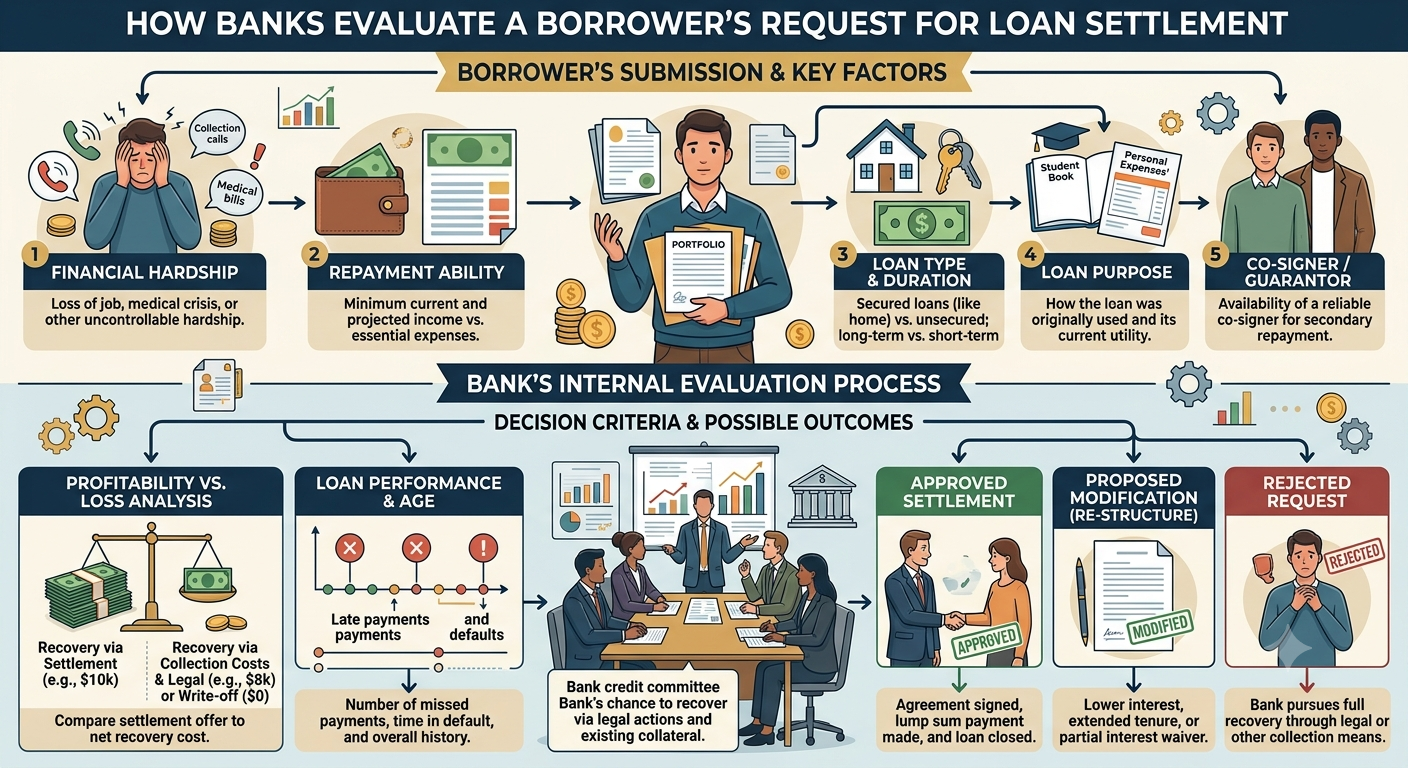
Lending institutions run every compromise proposal through a structured internal risk framework. Their primary goal is to determine whether the default stems from genuine distress or willful non-payment:
- Verification of Genuine Hardship: Lenders closely review supporting documents, such as medical records, pink slips, bank statements, or business loss reports, to confirm that repayment is genuinely beyond your capacity.
- Account Default Duration (NPA Classification): Accounts typically move to Non-Performing Asset (NPA) status after 90 days of continuous default. Banks are far more willing to negotiate waivers once an account is classified as an NPA, as recovery costs rise over time.
- Collateral Status and Loan Type: Unsecured obligations like personal loans and credit cards offer banks limited asset recovery options, making compromise resolutions attractive. For secured loans, banks prefer asset recovery unless legal realization costs exceed the debt value.
- Feasibility of the One-Time Settlement (OTS) Offer: Lenders analyze your lump-sum offer to ensure it represents the maximum recoverable amount relative to your current financial standing.
Bank Hardship Assessment vs. Willful Default Evaluation
| Criteria | Genuine Hardship Profile | Willful Defaulter Profile |
| Financial Transparency | Provides income proof and hardship documentation | Conceals assets, income sources, or bank accounts |
| Repayment History | Consistent past track record prior to crisis | History of strategic defaults despite stable cash flow |
| Settlement Viability | Offers a realistic, verified lump-sum payment | Offers low amounts without supporting financial proof |
| Institutional Action | Eligible for compromise waivers under RBI frameworks | Subject to immediate civil or criminal recovery proceedings |
Key Steps to Prepare Your Settlement Request
To improve your chances of bank approval, take these proactive steps before initiating discussions:
- Gather Documented Hardship Evidence: Compile clear records of income loss, medical costs, or business liabilities to validate your financial hardship.
- Audit Outstanding Dues: Separate original principal balances from penal interest, late charges, and processing fees to understand your true position.
- Formulate a Realistic Lump-Sum Proposal: Present a clear, affordable one-time payment offer rather than making vague promises.
- Insist on Formal Written Sanctions: Never remit funds based on verbal agreements. Ensure all terms are documented in an official Settlement Sanction Letter printed on bank letterhead.
Navigating Institutional Evaluations with Professional Guidance
Negotiating directly with bank credit committees while dealing with financial distress can feel intimidating. Working with accredited advisers ensures your financial hardship is represented effectively and negotiated within regulatory frameworks.
Partnering with an established loan settlement agency provides immediate protection against aggressive collection tactics. A professional loan settlement agency manages all official correspondence with credit managers, keeping negotiations structured and transparent.
Utilizing dedicated loan settlement services ensures your financial hardship profile is audited and presented correctly. Comprehensive loan settlement services challenge unjustified penal interest fees, document hardship claims, and secure optimal discount terms.
Consulting an experienced loan settlement expert provides strong leverage during formal committee reviews. An accredited loan settlement expert evaluates your repayment capacity, protects your rights under Reserve Bank of India (RBI) guidelines, and negotiates practical One-Time Settlement terms.
Executing a structured loan settlement brings legal closure to spiraling liabilities. Once a negotiated loan settlement sum is remitted directly to the lender, you receive a No Dues Certificate (NDC), ending recovery actions permanently.
If mounting debt defaults are creating stress, seeking a strategic loan settlement offers a clear path toward financial recovery. Working alongside a trusted loan settlement expert safeguards your rights, while relying on proven loan settlement services helps prepare your profile for long-term financial freedom.
Understanding how banks evaluate debt requests transforms a stressful situation into a manageable negotiation. By presenting clear evidence of hardship, insisting on written sanction letters, and partnering with verified advisers, you can resolve unmanageable debt safely and rebuild your financial independence.