
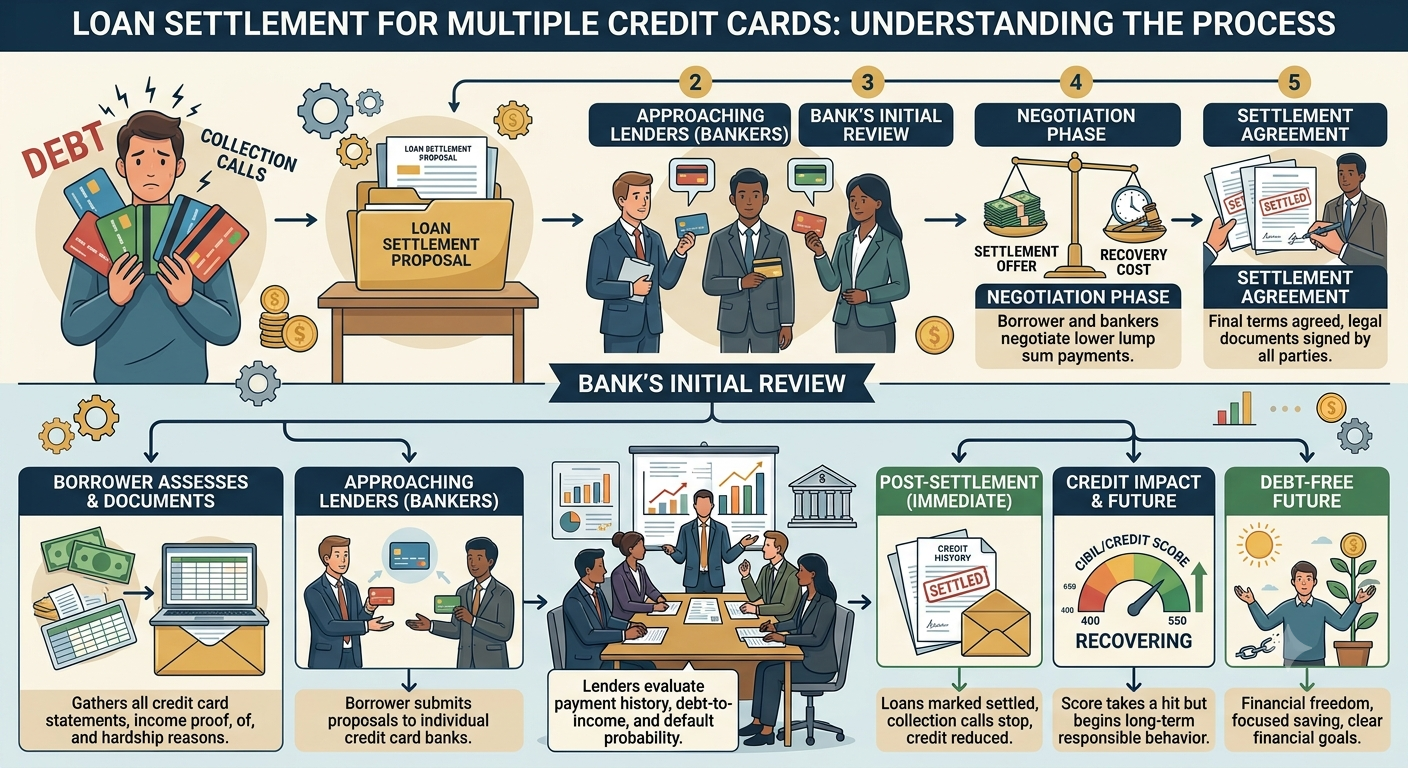
Juggling multiple credit cards with soaring interest rates can quickly turn a manageable financial structure into an overwhelming debt trap. High Annual Percentage Rates (APRs)—often exceeding 40% to 45% per annum—cause minimum due payments to absorb your monthly budget without reducing the underlying principal balance. When financial hardship strikes, seeking a structured compromise across all accounts becomes a vital strategy.
Understanding how to navigate debt compromise for multiple credit cards helps borrowers regain control, halt aggressive collection efforts, and achieve legal debt freedom.
Why Credit Card Debt Accumulates and Requires Settlement
Unsecured credit card debt compound rapidly due to revolving interest and penal fees. Unlike fixed-rate personal loans, credit card balances carry distinct challenges:
- Exorbitant Interest Compounding: Late fees, finance charges, and GST compound monthly, causing balances to double within short periods.
- Multiple Recovery Entities: Defaulting on three or four cards simultaneously means handling separate recovery desks, agencies, and legal notices from different financial institutions.
- Unsecured Loan Exposure: Because credit card accounts lack physical collateral, lenders recognize that long-term recovery costs may outweigh the asset’s value, making them open to One-Time Settlement (OTS) terms.
Step-by-Step Process for Settling Multiple Credit Cards
Resolving multi-card defaults requires a systematic approach to ensure every card issuer agrees to fair compromise terms:
- Comprehensive Debt & Default Audit: Catalog all outstanding card balances, separating actual principal spent from inflated penal fees and interest.
- Establish Non-Performing Asset (NPA) Status: Banks typically consider compromise proposals after an account remains defaulted for 90 days or longer, transitioning into NPA status.
- Pool Settlement Capital: Build a centralized lump-sum fund to offer realistic settlement payouts rather than making unsustainable monthly commitments.
- Negotiate Card by Card: Prioritize cards based on outstanding balance size, legal escalation risk, and lender responsiveness.
- Obtain Official Sanction Letters: Require a formal written settlement agreement on bank letterhead before making any payment.
Consolidated Card Management vs. Compromise Settlement
| Evaluation Factor | Debt Consolidation / Refinancing | Multi-Card Debt Compromise |
| Prerequisites | High credit score and steady verifiable income | Documented financial hardship and default status |
| Financial Outcome | Combines debts into one EMI at a lower interest rate | Waives accrued interest and reduces principal balance |
| Credit Score Impact | Minimal to neutral temporary impact | Short-term negative notation (“Settled” status) |
| Legal Closure | Ongoing monthly loan obligations | Immediate discharge of debt upon lump-sum payment |
Managing Recovery Agents and Legal Notices
Defaulting on multiple cards often triggers intense collection activity. Borrowers must understand their rights under banking guidelines:
- Demand Standard Collection Protocols: Recovery agents must abide by strict codes of conduct—harassment, intimidation, or contact during improper hours is illegal.
- Respond to Legal Notices Promptly: Always address formal legal communications, advocate notices, or arbitration summonses rather than ignoring them.
- Document All Hardship Proof: Maintain records of medical crises, job termination letters, or business cash flow losses to validate your case before bank committees.
Navigating Multi-Card Negotiations with Professional Support
Managing negotiations across several credit card issuers simultaneously while handling daily living expenses can feel overwhelming. Engaging qualified debt advisers ensures your profile is represented professionally and resolved legally.
Partnering with an accredited loan settlement agency establishes a buffer against harassing recovery calls. A dedicated loan settlement agency manages all legal notices and institutional communications across all your credit card issuers.
Utilizing comprehensive loan settlement services ensures penal charges are thoroughly audited. Professional loan settlement services negotiate to eliminate inflated finance fees and secure the highest possible principal discounts.
Consulting a recognized loan settlement expert helps build a strong hardship representation for bank credit committees. A verified loan settlement expert protects your rights under Reserve Bank of India (RBI) rules and ensures legal compliance throughout the process.
Executing a structured multi-card loan settlement provides permanent relief from compounding interest. After paying the negotiated sum, completing a formal loan settlement ensures you receive official No Dues Certificates (NDCs) from every lender.
If compounding credit card debt is threatening your financial stability, opting for a tailored loan settlement offers a clear path forward. Relying on an experienced loan settlement expert and verified loan settlement services allows you to discharge your credit obligations safely and start rebuilding your financial future.
Resolving multiple credit card debts requires legal clarity, strong evidence of financial hardship, and disciplined negotiation. By insisting on official written sanction letters and leveraging professional advice, you can resolve outstanding obligations and regain complete financial independence.