
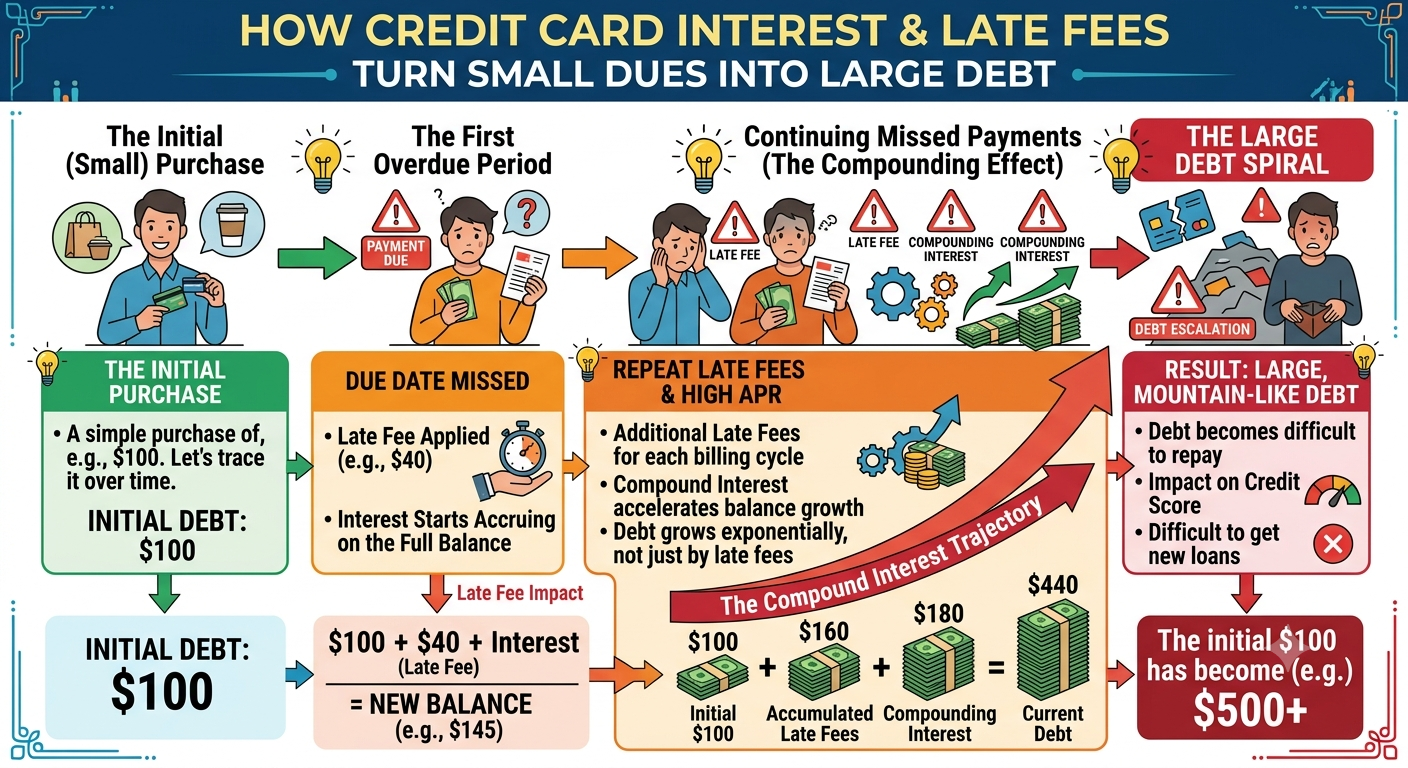
Credit cards are among the most convenient personal finance tools, providing instant liquidity and reward points. However, when an outstanding bill goes unpaid—even a modest amount—credit cards can rapidly become a financial liability. High interest rates, recurring late fees, and applicable taxes combine to create a compounding debt trap that turns minor balances into overwhelming obligations.
Understanding how credit card charges accumulate enables cardholders to take proactive steps toward debt resolution before liabilities escalate.
The Anatomy of Credit Card Debt Escalation
When you carry a balance past the due date, credit card issuers apply specific finance charges:
- High Annual Percentage Rates (APR): Credit cards carry interest rates ranging from 36% to 48% per annum (3% to 4% monthly). Unlike standard personal loans, credit card interest compounds daily or monthly.
- Loss of Interest-Free Grace Period: The moment you carry over a balance, the 45-to-50-day interest-free grace period is revoked. Every new purchase incurs interest charges immediately from the transaction date.
- Fixed Late Payment Fees: Lenders levy slab-based late fees for missing payment deadlines. These fixed charges are added to the principal balance every billing cycle.
- GST and Tax Penalties: In many jurisdictions, an additional Goods and Services Tax (GST) or administrative tax of 18% applies to all interest charges and late fees, accelerating balance growth.
The “Minimum Amount Due” Illusion
Paying only the “Minimum Amount Due” (usually 5% of the outstanding balance) is a common financial pitfall. While paying the minimum prevents immediate default status and wards off recovery calls, it pays off very little principal.
Instead, the remaining 95% continues to compound at interest rates exceeding 40% annually. A cardholder carrying a balance of INR 50,000 who pays only the minimum required amount can take years to clear the principal, paying double or triple the original purchase amount in accumulated interest.
Cost Comparison: Original Principal vs. Unpaid Default Trajectory
| Debt Stage | Initial Balance | Cumulative Charges (12 Months) | Total Payable Amount |
| Pristine Balance | INR 50,000 | INR 0 | INR 50,000 |
| Minimum Dues Paid Only | INR 50,000 | ~INR 18,500 (Interest + Taxes) | ~INR 68,500 |
| Complete Unpaid Default | INR 50,000 | ~INR 49,123 (Interest + Fees + GST) | INR 99,123 |
Reclaiming Financial Control Through Professional Debt Settlement
When credit card debts compound beyond your ability to repay, continuing to service minor charges without reducing the core balance creates severe financial distress. Seeking structural debt relief allows overburdened borrowers to regain stability.
Partnering with an established loan settlement agency provides critical support when dealing with card issuers and recovery departments. A dedicated loan settlement agency handles communications, halts aggressive collection practices, and negotiates formal terms.
Utilizing professional loan settlement services ensures that your financial hardship is documented in compliance with banking regulations. Specialized loan settlement services analyze your accrued liabilities, challenge excessive penal additions, and negotiate waivers on interest and fees.
Consulting an accredited loan settlement expert helps build a case for debt compromise. A qualified loan settlement expert negotiates directly with bank credit risk committees to reduce total outstanding dues into a manageable, lump-sum settlement.
Executing a structured loan settlement halts compounding interest and legal notices. Once an agreed loan settlement sum is paid, the bank issues a formal Settlement Sanction Letter followed by a No Dues Certificate (NDC), permanently discharging the debt.
If you are struggling with unmanageable credit card dues, seeking a tailored loan settlement offers a clear path toward financial recovery. Working alongside a dedicated loan settlement expert protects your rights, while comprehensive loan settlement services allow you to achieve debt relief and rebuild your financial future.
Unpaid credit card balances escalate quickly due to compounding interest, late fees, and taxes. By recognizing the mechanics of credit card debt early and seeking expert guidance when obligations become unmanageable, you can resolve outstanding dues and secure long-term financial stability.