
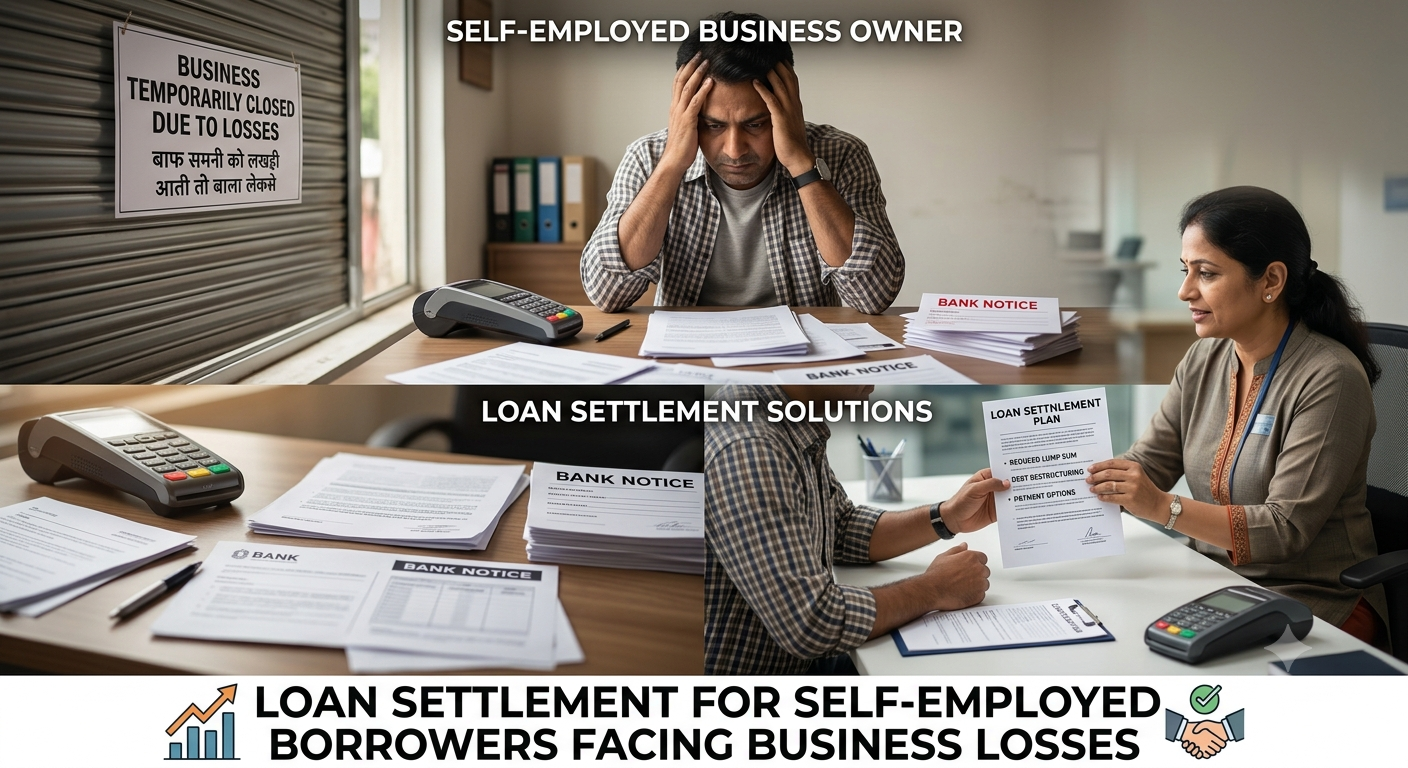
Running a business comes with inherent market risks, cash flow fluctuations, and unforeseen economic challenges. When revenue drops sharply or supply chain disruptions occur, self-employed individuals and small business owners often struggle to meet monthly Equated Monthly Installments (EMIs). As missed payments stack up, compounding interest, penal charges, and recovery pressure can create immense stress.
If your enterprise has suffered severe losses, One-Time Loan Settlement (OTS) offers a viable path to avoid insolvency. Understanding how self-employed borrowers navigate loan settlement during business downturns can protect your personal assets and provide a clean financial start.
Why Self-Employed Borrowers Face Severe Debt Crises
Unlike salaried individuals with fixed paychecks, self-employed entrepreneurs rely directly on business profitability. Primary causes of default among business owners include:
- Unpaid Invoices & Delayed Receivables: Working capital gets blocked when major clients delay payments or default on obligations.
- Market Volatility & Shift in Demand: Sudden shifts in consumer demand or macroeconomic inflation can erase operating margins.
- Fixed Operational Costs: Expenses like rent, staff salaries, and utility bills persist even when revenue plummets.
- Over-Leveraging across Lenders: Entrepreneurs often combine business loans, personal credit, and working capital lines to sustain operations, creating overwhelming debt.
Can Self-Employed Borrowers Negotiate a Settlement?
Yes. Banks and Non-Banking Financial Companies (NBFCs) recognize that business failure is a commercial reality. When a self-employed borrower defaults past 90 days (classified as a Non-Performing Asset or NPA), lenders realize full recovery may be unlikely.
During a structured settlement, lenders frequently grant significant concessions:
- Penal Interest & Late Fee Waivers: Complete waiver of accumulated bounce charges, late fees, and penal interest.
- Principal Discount: A negotiated reduction in core principal balances based on verified distress.
- Flexible One-Time Terms: Structuring compromised sums into manageable lump-sum or short-installment terms.
Step-by-Step Settlement Strategy for Business Owners
Step 1: Audit Business Financials and Liabilities
Gather financial statements, including balance sheets, profit and loss reports, bank statements, and tax returns (ITR). Separate personal debt from commercial liabilities to evaluate total exposure.
Step 2: Establish Involuntary Business Loss
Lenders require clear proof that default resulted from genuine commercial failure rather than willful non-payment. Document revenue drops using audited financial reports, client cancellation letters, GST summaries, or legal notices from creditors.
Step 3: Present a Proposal to Credit Committees
Draft a written hardship proposal addressed to the bank’s Nodal Officer or Recovery Manager. Outline the causes of business decline, provide an honest assessment of current asset value, and present a realistic settlement offer.
Step 4: Secure an Official Sanction Letter
Never deposit settlement funds based on verbal promises. Demand a formal sanction letter printed on bank letterhead explicitly stating compromised amounts, payment deadlines, and confirmation of debt discharge.
Essential Resources for Self-Employed Borrowers
Navigating institutional banking hierarchies during a commercial crisis requires technical financial knowledge and strong legal advocacy. Explore these specialized resources to manage your recovery safely:
- Gain strategic advice on managing commercial defaults by consulting a certified loan settlement expert.
- Explore tailored relief plans for business loans and working capital through loan settlement services.
- Learn how to protect your assets and understand borrower rights using comprehensive loan settlement guides.
- Prevent recovery harassment and secure professional representation with a reputable loan settlement agency.
- Rebuild your financial foundation and restructure liabilities with guidance from an accredited loan settlement expert.
- Eliminate unfair penal charges and negotiate optimal principal discounts through specialized loan settlement services.
- Manage bank legal notices and recovery procedures supported by a trusted loan settlement agency.
- Evaluate one-time settlement options and credit score impacts with professional loan settlement advice.
- Safeguard your commercial reputation and family assets with direct aid from a skilled loan settlement expert.
- Obtain complete administrative support and legal closure using institutional loan settlement services.
- Achieve legal closure and secure an official No Dues Certificate (NDC) with an established loan settlement agency.
Rebuilding After Settlement
While settlement results in a “Settled” status on credit reports (CIBIL), it offers an essential lifeline by stopping interest accumulation, halting legal notices, and ending harassment. Once debt-free, business owners can refocus on building new income streams and gradually rebuilding credit scores through secured instruments.
Facing business losses is challenging, but spiraling debt does not have to mean the end of your financial journey. By taking proactive steps, presenting verified hardship documentation, and partnering with experienced legal advisors, self-employed borrowers can successfully settle outstanding debts and achieve lasting financial recovery.