
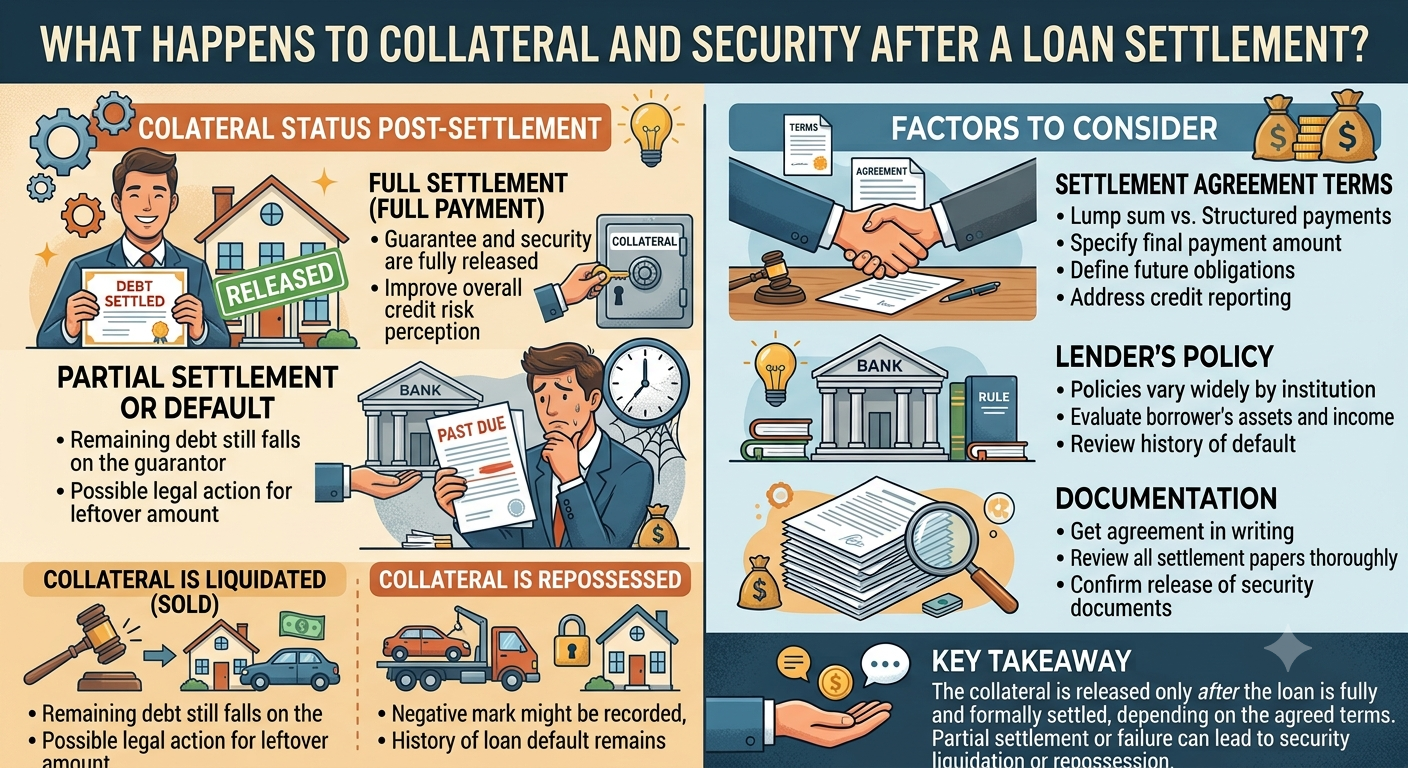
When a secured loan—such as a home loan, Loan Against Property (LAP), or commercial vehicle loan—enters default, borrowers face the immediate threat of losing their pledged assets. To prevent asset repossession and public auctions under laws like the SARFAESI Act, many distressed borrowers negotiate a One-Time Settlement (OTS).
While a settlement resolves the outstanding money owed to the bank, it raises a crucial question for property and asset owners: What happens to your collateral, pledged property documents, or Hypothecation status once the settlement is completed?
Understanding the exact legal mechanism for reclaiming your property deeds, removing bank charges, and obtaining a clean title is essential for protecting your real estate and personal assets after a settlement.
The Collateral Release Process After Loan Settlement
When you pledge an asset as security for a loan, the lender holds either physical custody of your original title deeds (equitable mortgage) or records a legal charge against the asset (registered mortgage or hypothecation). Once a One-Time Settlement is negotiated and the compromised lump-sum payment is remitted, the lender is legally required to release all claims against the collateral.
+-------------------------------------------------------------------------------+
|                    COLLATERAL RELEASE & DISCHARGE WORKFLOW                    |
+-------------------------------------------------------------------------------+
| Phase 1: Remittance of Settlement Amount per Sanction Terms                   |
| Phase 2: Issuance of No Dues Certificate (NDC) & Discharge Letter             |
| Phase 3: Physical Handover of Original Property Title Deeds / Registration    |
| Phase 4: Deed of Re-Conveyance & Cancellation of Bank Charge (Sub-Registrar)  |
| Phase 5: CERSAI Registry Removal & RTO Hypothecation Cancellation             |
+-------------------------------------------------------------------------------+
Key Steps to Reclaiming Your Pledged Collateral
To ensure your property or asset is fully liberated from the bank’s legal custody without future title defects, follow these mandatory steps:
1. Secure an Explicit Release Clause in the Sanction Letter
Before making your final settlement payment, verify that the bank’s Settlement Sanction Letter explicitly states that upon receipt of the agreed compromised sum:
- The bank waives all remaining claims on the property or asset.
- All original title deeds will be returned within a specified timeframe (usually 15 to 30 days).
- The bank will initiate charge cancellation with statutory registries.
2. Obtain the Official No Dues Certificate (NDC)
Once the settlement funds clear, the lender issues an official No Dues Certificate (NDC) or No Objection Certificate (NOC). This document serves as primary legal proof that the underlying financial obligation is satisfied and the mortgage is discharged.
3. Physical Inspection and Return of Original Documents
Visit the bank’s secure repository or home branch in person to collect your original documents. Inspect every paper carefully:
- Original sale deeds, parent documents, and title chains.
- Approved building plans, encumbrance certificates, and allotment letters.
- Original fixed deposit receipts or pledged share certificates (if applicable).
Ensure the bank provides an official Document Handover List signed and stamped by the branch manager acknowledging the return of all original title papers.
4. Register a Deed of Re-Conveyance (Sub-Registrar Office)
If your mortgage was legally registered at the local Sub-Registrar’s Office, simply getting your papers back is not enough. You must register a Deed of Re-Conveyance (or Cancellation of Mortgage Deed). A bank representative must sign this document to formally strike off the bank’s lien from government land records.
5. Removal of CERSAI Charges and RTO Hypothecation
- CERSAI Portal: Lenders register security interests on the Central Registry of Securitisation Asset Reconstruction and Security Interest (CERSAI) portal. Demand that the bank update the portal to reflect the complete satisfaction of the security charge.
- Vehicles (RTO): For automobile loans, submit the bank NOC along with Form 35 to your local Regional Transport Office (RTO) to remove the hypothecation entry from your vehicle’s Registration Certificate (RC).
Collateral Status: Full Payment vs. One-Time Settlement
| Parameter | Standard Full Repayment | One-Time Settlement (OTS) |
| Return of Title Deeds | Guaranteed within 15–30 days | Guaranteed upon full OTS payment |
| Charge Cancellation | Automatic via Bank NOC | Requires explicit release clause in OTS letter |
| Property Title Quality | Clean title restored | Clean title restored (if re-conveyance registered) |
| CERSAI & Land Records | Charge marked satisfied | Charge marked satisfied |
Essential Resources for Collateral Release and Legal Protection
Navigating property law, ensuring proper charge cancellation, and managing bank credit committees requires specialized legal advocacy and technical experience. Explore these dedicated resources for expert assistance:
- Gain clarity on collateral release terms by consulting a certified loan settlement expert.
- Explore comprehensive legal defense against property auctions via loan settlement services.
- Learn how to structure asset release clauses using complete loan settlement guides.
- Protect your property from SARFAESI notices by partnering with a trusted loan settlement agency.
- Review your title document inventory and sanction letters alongside an accredited loan settlement expert.
- Waive illegal penal charges and negotiate optimal principal discounts through specialized loan settlement services.
- Manage Debt Recovery Tribunal (DRT) filings and mortgage releases supported by an established loan settlement agency.
- Understand CERSAI charge cancellation rules and registry protocols with professional loan settlement advice.
- Safeguard your real estate assets and secure written discharge guarantees from a skilled loan settlement expert.
- Obtain institutional representation and document retrieval support through dedicated loan settlement services.
- Achieve full legal closure and secure your official No Dues Certificate with an experienced loan settlement agency.
Final Thoughts
Settling a secured loan offers an effective way to stop asset liquidation and protect your property. By ensuring your sanction letter includes explicit collateral release terms, collecting all original title deeds, and registering a Deed of Re-Conveyance, you can successfully remove all bank liens and secure unencumbered ownership of your valuable assets.