
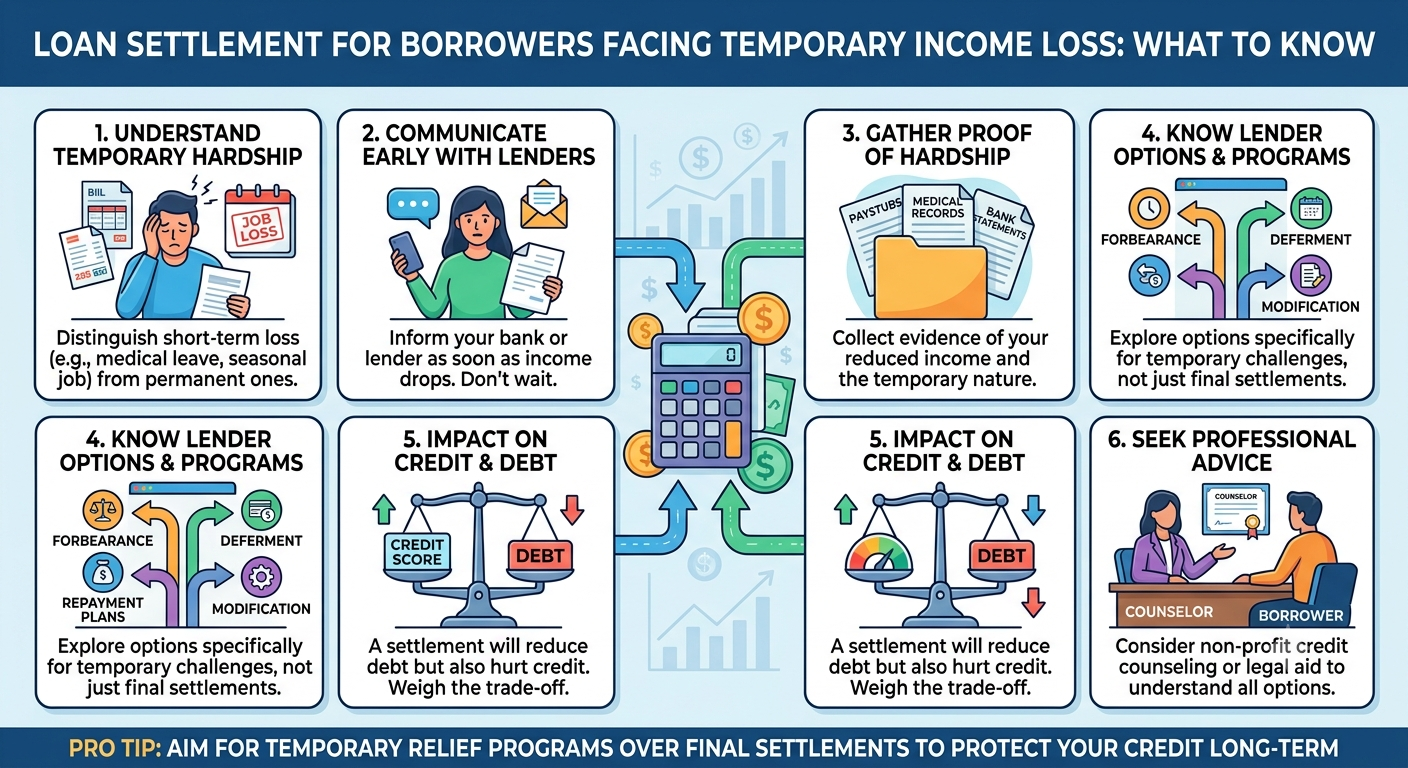
A sudden layoff, salary delay, health emergency, or business slowdown can instantly throw your finances off track. When monthly Equated Monthly Installments (EMIs) or credit card dues become unmanageable due to temporary income loss, borrowers often find themselves stuck in a cycle of mounting penalty fees and persistent recovery demands.
When income stops unexpectedly, an essential question arises: How can you manage debt obligations and leverage a One-Time Settlement (OTS) without destroying your long-term financial standing?
Understanding how lenders view involuntary financial distress and taking proactive, documented steps can help you navigate temporary income loss, stop agent harassment, and achieve a fair resolution.
Why Temporary Income Loss Opens the Door for Loan Settlement
Banks and Non-Banking Financial Companies (NBFCs) classify loans with unpaid dues exceeding 90 days as Non-Performing Assets (NPAs). When faced with default caused by genuine hardship, lenders recognize that pursuing full recovery through legal channels is costly and time-consuming.
+-------------------------------------------------------------------------------+
|                 TEMPORARY INCOME LOSS & SETTLEMENT ROADMAP                    |
+-------------------------------------------------------------------------------+
| 1. Income Shock         --> Job Loss, Medical Crisis, Business Slowdown        |
| 2. Hardship Dossier     --> Collect pink slips, medical bills, or SOA         |
| 3. Formal Representation--> Present a clear hardship file via official desk   |
| 4. OTS Approval         --> Negotiate 30% to 70% waivers & get Sanction Letter|
+-------------------------------------------------------------------------------+
When you present verifiable proof of temporary hardship—such as termination letters, salary reduction slips, or medical bills—lenders are far more willing to negotiate. A negotiated compromise allows the lender to write off accumulated penal charges and recover a realistic portion of the principal balance rather than risk a total default.
Strategic Steps to Settle a Loan During Income Disruptions
If you are experiencing temporary income loss, follow these structured steps to negotiate with your lender and secure relief:
1. Compile an Unassailable Hardship File
Do not rely on verbal explanations over phone calls. Build a hardship dossier containing income tax returns, bank statements, termination notices, medical records, or audited loss statements. These documents demonstrate that your default is due to involuntary economic distress rather than intentional non-payment.
2. Halt Agent Harassment and Shift to Written Channels
Tele-callers and third-party recovery agents frequently use aggressive tactics when EMIs lapse. Redirect all recovery communications to written letters or official email correspondence addressed directly to the lender’s Nodal Officer or settlement division.
3. Audit Statement Charges for Unfair Fees
Obtain an official Statement of Account (SOA) from your lender. Carefully review accumulated charges to distinguish your original unpaid principal balance from penal interest, late payment fines, and bounce fees. Ensure your settlement target includes a 100% waiver of penal charges alongside a reasonable discount on the principal.
4. Secure a Formal Written Settlement Sanction Letter
Never deposit money based on verbal promises or informal messages from field agents. Ensure you receive an official Settlement Sanction Letter on the bank’s letterhead. This document must detail the negotiated settlement figure, specify the payment due date, and explicitly state that the payment fulfills all outstanding obligations for full legal discharge.
Comparison: Temporary Relief vs. One-Time Settlement (OTS)
| Parameter | Moratorium / EMI Restructuring | One-Time Settlement (OTS) |
| Primary Goal | Temporary pause or tenure extension | Permanent debt relief & account closure |
| Financial Impact | Increases total interest payable | Reduces payable sum (30% to 70% savings) |
| Requisite Condition | Expected quick income recovery | Severe/sustained financial distress |
| Credit Report Status | Marked as “Restructured” | Marked as “Settled” |
Key Resources for Navigating Loan Settlement
Navigating lender negotiations, managing recovery demands, and verifying legal settlement terms during income disruptions require specialized assistance. Explore these essential resources for expert help:
- Consult a certified loan settlement expert to evaluate your hardship dossier and settlement options.
- Protect yourself from recovery calls and negotiate waivers via structured loan settlement services.
- Learn how to structure compromise offers using complete loan settlement guides.
- Safeguard your legal rights during income disruptions by partnering with a trusted loan settlement agency.
- Review your loan statements and hardship documents alongside an experienced loan settlement expert.
- Eliminate late fees and secure principal discounts through professional loan settlement services.
- Stop recovery agent harassment supported by a reputable loan settlement agency.
- Understand RBI guidelines and settlement procedures with expert loan settlement guidance.
- Resolve high-interest debt traps and legal notices with help from a dedicated loan settlement expert.
- Obtain institutional representation during bank negotiations using comprehensive loan settlement services.
- Secure an official No Dues Certificate (NDC) and full legal discharge with an established loan settlement agency.
Final Thoughts
Experiencing temporary income loss does not mean you are defenseless against mounting debt. By documenting your financial hardship, shifting communications to written channels, demanding official sanction letters, and seeking expert guidance, you can negotiate a fair settlement, eliminate penal interest, and achieve lasting debt relief.