
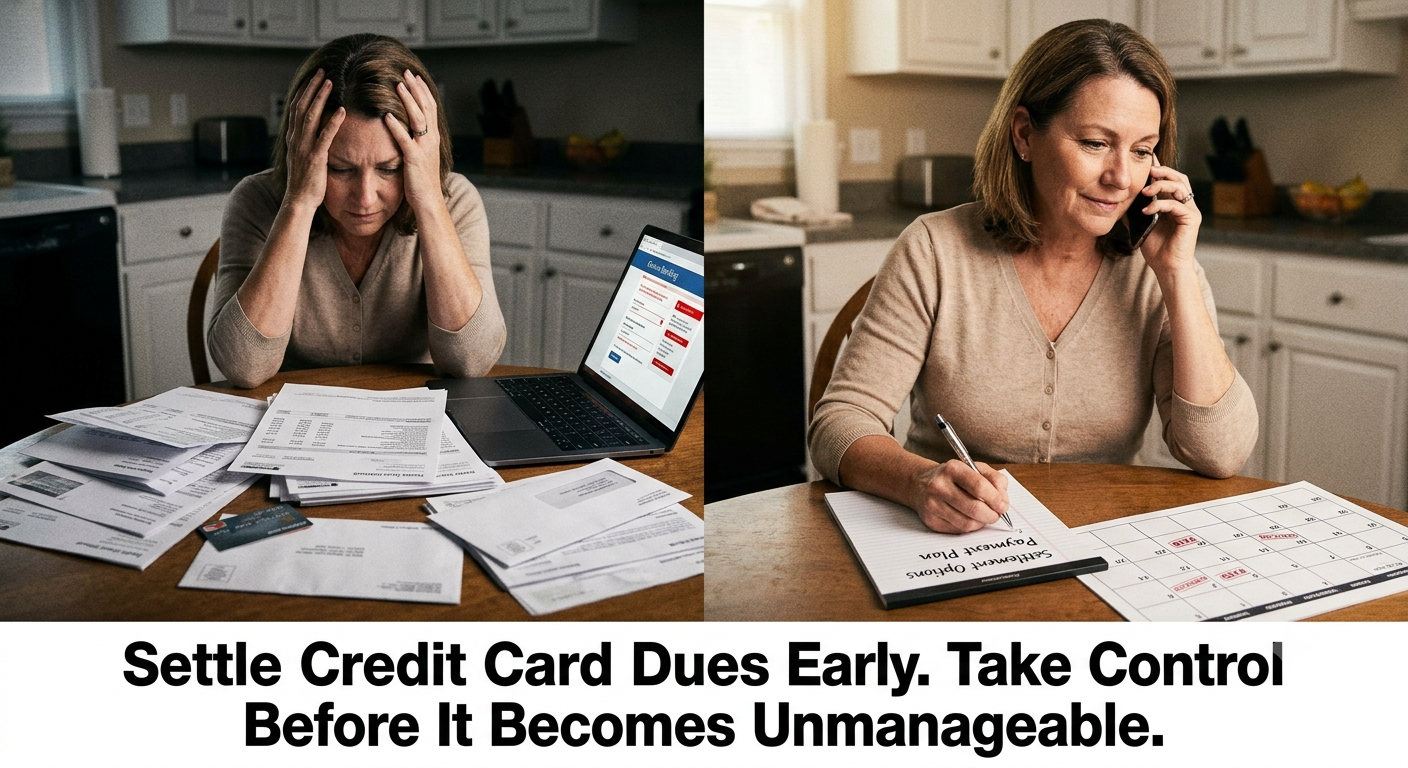
Managing credit card debt can feel like walking a financial tightrope. High Annual Percentage Rates (APRs), recurring late payment fees, and compounding finance charges can quickly transform manageable purchases into overwhelming liabilities. Many credit cardholders facing early signs of financial distress ask a fundamental question: Can credit card dues be settled before they become completely unmanageable?
The short answer is yes, but initiating a One-Time Settlement (OTS) requires understanding bank policies, regulatory frameworks, and strategic timing.
The Reality of Early Debt Resolution
Financial institutions are generally hesitant to offer debt write-offs on accounts that are currently up-to-date, as regular EMI payments signal active repayment capacity. However, lenders prioritize risk mitigation. When borrowers present verifiable evidence of imminent financial hardship—such as job loss, critical medical emergencies, or severe business revenue decline—banks become more willing to negotiate before formal recovery proceedings begin.
Proactive communication allows credit committees to evaluate compromise proposals early, helping borrowers avoid months of compounding interest and aggressive recovery tactics.
Key Steps to Proactively Settle Credit Card Dues
- Conduct an Audit of Total Outstanding Balances: Distinguish between actual card expenditure (principal) and accumulated finance charges, penal interest, and processing fees.
- Build a Lump-Sum Settlement Fund: Banks rarely accept compromise offers paid through installments. Secure a pool of capital through savings, family support, or secondary asset liquidation before making an offer.
- Assemble Verifiable Hardship Documentation: Gather objective proof showing your financial distress, such as pink slips, medical bills, or bank cash-flow statements.
- Submit a Formal Compromise Proposal: Send a written application to the bank’s Nodal Officer or Recovery Manager outlining your involuntary default and proposing a realistic lump-sum settlement sum.
- Secure an Official Sanction Letter: Never transfer funds without a written settlement agreement printed on official bank letterhead and signed by authorized personnel.
Comparing Early Resolution vs. Prolonged Default
| Evaluation Parameter | Early / Proactive Negotiation | Prolonged / Late Default |
| Accrued Interest Burden | Minimizes compounding daily interest fees | Maximizes penal interest and late charges |
| Collection Harassment | Prevents aggressive third-party collection calls | Subject to intense collection agent contact |
| Credit Rating Impact | Triggers “Settled” status with quicker recovery | Long-term damage with severe score drops |
| Legal Exposure | Reduces risk of formal legal notices | High risk of arbitration or court notices |
Protecting Your Consumer Rights During Negotiations
Borrowers in financial distress retain legal rights under Reserve Bank of India (RBI) consumer protection guidelines:
- Fair Collection Practices: Recovery agents may only contact cardholders between 8:00 AM and 7:00 PM.
- Prohibition of Intimidation: Threatening language, workplace harassment, or privacy violations are strictly illegal.
- Right to Official Documentation: Lenders must issue a formal No Dues Certificate (NDC) once sanctioned settlement funds are paid.
Navigating Early Credit Card Settlement with Professional Support
Managing complex negotiations with bank credit managers while handling personal financial stress can be challenging. Partnering with experienced financial advisors ensures your case is presented persuasively and within regulatory boundaries.
Engaging an established loan settlement agency provides an immediate buffer against collection pressure. A dedicated loan settlement agency handles all institutional correspondence, legal notices, and bank meetings on your behalf.
Utilizing specialized loan settlement services guarantees a thorough audit of accumulated charges. Comprehensive loan settlement services help eliminate unjustified finance fees and negotiate maximum principal discounts.
Consulting a recognized loan settlement expert strengthens your standing before bank credit committees. An accredited loan settlement expert evaluates your repayment capacity, safeguards your rights under RBI frameworks, and secures viable settlement terms.
Executing a structured loan settlement stops compounding interest and provides legal closure. Completing a formal loan settlement ensures you receive an official No Dues Certificate (NDC), permanently closing the card account.
If rising card balances threaten your financial stability, seeking a strategic loan settlement offers a clear path toward financial recovery. Relying on a qualified loan settlement expert and utilizing trusted loan settlement services allows you to discharge your obligations safely and rebuild your financial independence.
Settling credit card dues before they become unmanageable requires preparation, clear hardship proof, and structured negotiation. By insisting on written sanction letters and leveraging professional advice, you can resolve outstanding obligations safely and secure long-term financial peace of mind.